


How Can Change Management Drive Maximum ROI from Your ServiceNow ITSM implementation Dubai?

Updated: Jul 12
Enterprise organizations across Dubai, Abu Dhabi, and the broader GCC region invest heavily in ServiceNow Dubai licenses, expecting transformative results. Yet research reveals that up to 50% of implementations fail to deliver expected ROI—not because the platform lacks capability, but because change management committees fail to drive proper user adoption. When companies pay premium costs for comprehensive ServiceNow implementation UAE licenses, every unused feature represents wasted capital and missed opportunity.
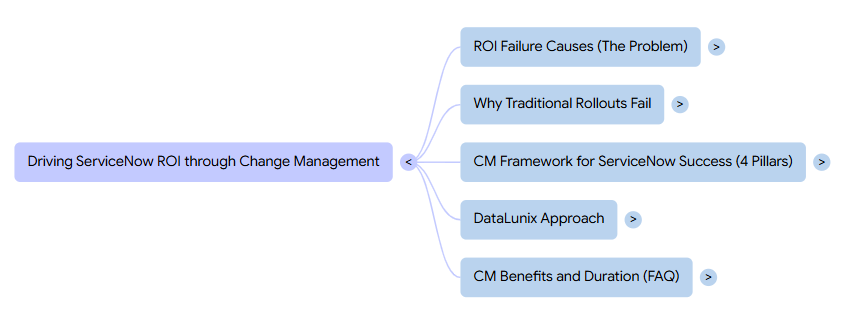
The pattern repeats across industries: initial enthusiasm fades as complex features remain isolated, teams revert to workarounds, and blame shifts to the platform rather than the adoption process. Organizations then consider migrating to competitor products, compounding losses through transition costs and continued underutilization. The root cause isn't technological—it's organizational. Without diligent change management driving feature awareness and adoption, even the most sophisticated ITSM implementation Dubai projects deliver fractional value.
The Hidden Cost of Feature Underutilization
When enterprises acquire ServiceNow consulting Dubai services and implement the platform, they gain access to extensive capabilities spanning incident management, automation, service catalogs, knowledge bases, and advanced analytics. However, studies show that inadequate training and lack of ongoing enablement cause adoption to stall after initial deployment. Teams use perhaps 30-40% of available functionality, yet pay for 100% of licensing.
This underutilization creates cascading problems across the organization. End users struggle with features they don't understand, leading to support tickets that strain IT resources. Shadow IT emerges as frustrated employees seek alternative tools that seem simpler. License costs continue accruing while business processes remain inefficient. Eventually, leadership questions whether ServiceNow optimization GCC investments were justified, when the real issue was implementation of change management discipline rather than platform capability.
The financial impact extends beyond direct licensing costs. Organizations experience productivity losses from employees manually performing tasks that could be automated, compliance risks from inconsistent processes, and opportunity costs from delayed digital transformation initiatives. Research indicates that companies without structured change management see 39% higher employee resistance and significantly lower adoption rates.
Why Traditional Rollouts Fail Without Change Management - ITSM Implementation Dubai
Most digital transformation Dubai projects follow a predictable trajectory. Architects design sophisticated solutions mapping business requirements to platform capabilities. Implementation teams configure workflows, integrations, and customizations. Initial training sessions generate enthusiasm as employees experience the new system. Then complexity increases, enthusiasm wanes, and adoption plateaus.
The gap emerges between architectural intent and daily usage. While architects envision end-to-end automation and self-service capabilities, users stick to familiar patterns, creating manual workarounds rather than exploring features. Advanced functionality—predictive intelligence, automated approvals, orchestration workflows—remains dormant because change management teams haven't translated architectural vision into user-level understanding.
Organizations that treat change management as a one-time training event rather than continuous discipline face predictable failures. Without ongoing reinforcement, employees forget training content within weeks. Complex features requiring practice and exploration get abandoned. Customizations designed to streamline processes go unused because users don't understand when or how to leverage them. The platform becomes an expensive ticketing system rather than a transformation engine.
The Change Management Framework for ServiceNow Success -
Successful ServiceNow partner UAE engagements implement structured change management frameworks that span the entire implementation lifecycle and beyond. This framework consists of four integrated pillars that drive sustained adoption and feature utilization.
Governance and Ownership Structure
Establish a dedicated change management committee with clear accountability for adoption outcomes. This committee should include business process owners, IT leadership, training specialists, and executive sponsors who meet regularly to assess adoption metrics and address barriers. Define specific roles: product owners who champion features, change agents embedded within departments, and adoption analysts who track utilization data.
The governance structure must have authority to intervene when adoption stalls. This includes reallocating training resources, adjusting workflows based on user feedback, and escalating systemic issues to leadership. Without enforcement mechanisms and decision-making power, change management becomes advisory rather than operational.
Phased Enablement Strategy
Replace big-bang training with continuous, role-based enablement that matches how employees actually work. Segment users by function—IT service desk, business users, managers, administrators—and deliver targeted guidance relevant to their workflows. Begin with core capabilities that deliver immediate value, then progressively introduce advanced features as foundational adoption solidifies.
Leverage digital transformation GCC best practices by implementing pilot programs before full rollouts. Select representative user groups to test workflows, identify usability issues, and refine training approaches. These pilot users become internal advocates who provide peer-level guidance during broader deployment. Phase introductions based on complexity and business impact rather than technical capability.
Contextual Learning and Support
Traditional classroom training delivers poor retention rates for complex platforms. Organizations need in-application guidance that provides help exactly when users need it. Digital adoption platforms can overlay contextual tooltips, walkthroughs, and task validation directly within ServiceNow consulting services Qatar interfaces. This approach reduces cognitive load and accelerates competency development without disrupting workflows.
Create role-specific knowledge repositories documenting common scenarios, best practices, and troubleshooting guides. Ensure these resources use business language rather than technical jargon. Establish feedback loops where users can report confusion or request additional guidance on specific features. Continuously refine support materials based on actual usage patterns and support ticket trends.
Measurement and Continuous Optimization
Define adoption metrics that reflect business outcomes rather than vanity statistics. Track workflow completion rates, feature utilization depth, time-to-task-completion, and support ticket volume reduction. Monitor license allocation to identify unused or underutilized accounts that represent optimization opportunities. Conduct quarterly reviews comparing actual usage against architectural intent to identify capability gaps.
Use data to drive targeted interventions. If automation features show low adoption, investigate whether users understand triggers and benefits. If self-service portal usage lags, assess whether catalog items align with actual request patterns. Create feedback mechanisms where business stakeholders report unmet needs that might be addressed by unexplored platform features. This continuous improvement cycle ensures the platform evolves with organizational requirements.
DataLunix Approach to Change-Driven Implementation
At DataLunix, our ServiceNow implementation company Dubai methodology embeds change management into every engagement phase. We recognize that technical excellence means nothing without user adoption. Our discovery workshops assess organizational readiness, identifying cultural factors and skill gaps that could impede adoption. During implementation, we work alongside client change management teams, providing stakeholder communication plans and training enablement frameworks that ensure smooth transitions.
Our managed services extend beyond technical support to include adoption optimization. We monitor utilization metrics, identify underused features, and design targeted enablement campaigns that drive expanded capability usage. This continuous engagement ensures organizations realize full value from their ServiceNow solutions Oman investments rather than experiencing the post-implementation decline common in the industry.
FAQ
Why do companies blame ServiceNow when implementations fail?
Because visible symptoms—low user satisfaction, continued manual processes, support burdens—manifest as platform issues when root causes stem from inadequate change management and training investments that prevent users from understanding available capabilities.
What percentage of ServiceNow capabilities do most organizations actually use?
Research suggests that organizations without structured change management utilize only 30-40% of licensed capabilities, leaving significant functionality unexplored while paying full licensing costs for comprehensive features.
How long does effective change management need to continue after go-live?
Change management is not a phase but an ongoing discipline that should continue throughout the platform lifecycle, with particularly intensive focus during the first 90 days and sustained efforts to introduce advanced features over 12-18 months post-implementation.
What ROI improvements can proper change management deliver?
Organizations implementing structured change management frameworks report 60-80% higher user adoption rates, 40-50% reduction in support tickets, and significantly improved workflow efficiency that directly impacts bottom-line productivity.
Should change management be internal or external resources?
Most successful approaches combine internal change champions who understand organizational culture with external expertise from implementation partners who bring cross-industry best practices and proven frameworks for driving ServiceNow-specific adoption.
Get Started with Us
Maximizing your ServiceNow UAE investment requires more than technical implementation—it demands strategic change management that drives adoption from executives to end users. DataLunix combines deep platform expertise with proven change enablement frameworks, ensuring your organization realizes full ROI from licensed capabilities.
Whether you're planning a new implementation or seeking to optimize existing deployments across Dubai, Abu Dhabi, Qatar, Saudi Arabia, or broader GCC markets, our team delivers tailored solutions that transform platforms into business accelerators. Contact us today to discuss how our consulting, implementation, and managed services can drive the user adoption and feature utilization your ServiceNow investment deserves.
Related guides
How Can CIOs Choose the Right ServiceNow Partner in UAE for Enterprise Success?
How Can Governance Risk & Compliance GRC Software Unify Your Enterprise?
How Can Vibe Coding in ServiceNow Zurich Transform Different Stakeholders in Your Organization?
How Can You Achieve Elite Performance with DevOps DORA Metrics?
