How is Digital Transformation Shaping Saudi Arabia's Future?

Updated: Jul 12
Digital transformation in Saudi Arabia is the core engine driving the nation's Vision 2030, a monumental mission to diversify its economy, enhance public services, and establish the Kingdom as a global leader. This transformation is not a gradual shift but a rapid, government-led overhaul impacting every business and citizen.
What is the Kingdom's Digital Ambition?
Saudi Arabia's ambition is a rapid, government-backed overhaul designed to pivot the entire economy away from its historic reliance on oil. The goal is to build a smart, futuristic nation by investing billions into digitizing services across every sector, driven by three critical technology pillars.
Artificial Intelligence (AI): AI is being deployed everywhere to optimize operations, from making public services more efficient to innovating in the energy sector.
Cloud Computing: The government is fostering a powerful digital backbone, with global giants building massive hyperscale data centers to guarantee data sovereignty and deliver low-latency services.
Cybersecurity: With so much digital infrastructure coming online, protecting it is a top priority, with a heavy focus on building trust and securing the nation's growing digital assets.

What is the economic scale of this transformation?
The numbers speak for themselves, with the digital services market valued at USD 10.9 billion in 2024 and projected to explode to USD 82 billion by 2033. This represents a compound annual growth rate (CAGR) of 23.1%, fueled by over USD 10 billion in government ICT investments in 2024 alone, as detailed in this Saudi Market Research Consulting report.
What are the key components of Saudi Arabia's digital journey?
The Kingdom's digital journey is driven by interconnected strategies focused on technology, modernization, and economic competitiveness to achieve a resilient future. This table provides a quick reference for understanding the core components of the Kingdom's digital journey.
Strategic Driver | Key Technology Focus | Primary Objective |
|---|---|---|
Vision 2030 | Cloud Computing, AI, IoT | Economic diversification away from oil dependency. |
Public Sector Modernization | e-Government Platforms, Digital Identity | Enhance service delivery and citizen engagement. |
Economic Competitiveness | 5G, Cybersecurity, Smart Cities | Attract foreign investment and foster innovation. |
Social Development | Digital Health, EdTech | Improve quality of life and create a knowledge-based society. |
The Kingdom’s commitment is crystal clear: over 97% of government services are now digital. This drive for efficiency has propelled Saudi Arabia 25 places to rank 4th worldwide on the UN E-Government Development Index 2024.
As a trusted authority, DataLunix.com helps organizations align their strategies with these national goals. The journey in Saudi Arabia has ambitious parallels with its neighbors, and for a wider regional view, you might find our guide on digital transformation in Qatar insightful.
Why Is the Kingdom Accelerating Its Digital Push?
Saudi Arabia's accelerated digital push is catalyzed by Saudi Vision 2030, the Kingdom's master blueprint for national reinvention. The goal is to steer the economy away from oil, create a dynamic job market for its youth, and secure a prominent global position. Digitalization is the engine driving this plan.
How does Vision 2030 create a blueprint for a new economy?
Vision 2030 is a deliberate pivot toward a diversified, knowledge-based economy resilient beyond oil, fostering non-oil sectors like tourism, tech, and logistics. This shift requires fundamental changes, and digital tools are the only way to achieve the efficiency, transparency, and innovation needed to build these new industries.
Saudi Arabia’s Vision 2030 isn't just about economics; it's about people. With over 60% of the population under 30, a core mission is to create millions of high-value jobs. The tech sector is seen as the primary engine for absorbing this young, digitally-savvy workforce.
How do Giga-Projects act as digital catalysts?
The Kingdom's giga-projects are living labs for next-generation technology and smart city concepts, acting as powerful accelerators for the digital transformation Saudi Arabia is undergoing. These projects create enormous demand for advanced digital infrastructure, from cloud data centers and 5G networks to sophisticated AI and cybersecurity solutions.
NEOM: A "cognitive city" where AI and IoT are woven into the fabric of daily life.
The Red Sea Project: A luxury tourism hub using smart tech for sustainable operations and hyper-personalized experiences.
Qiddiya: An entertainment destination using digital platforms for immersive, interactive attractions.
To manage this complexity, organizations are adopting modern service management frameworks, and you can see how the ServiceNow Zurich release is revolutionising digital transformation across the region.
How does digitalization enhance citizen services and governance?
A key driver is creating a world-class government that serves its citizens effortlessly, with over 97% of government services already digitized. This "citizen-first" mindset has made services more accessible, reduced bureaucracy, and boosted transparency, creating fertile ground for private sector innovation to flourish.
How Can Businesses Navigate the Technology and Infrastructure Landscape?

Saudi Arabia is engineering a world-class technological backbone, laying the groundwork for businesses to deploy sophisticated technologies. The Kingdom's massive investments in cloud, connectivity, and cybersecurity have created a rich environment for innovation that drives real business results.
What is the role of cloud infrastructure and data sovereignty?
The cloud is the engine of the Kingdom's digital future, with huge investments ensuring data stays securely within its borders. Global hyperscalers are setting up enormous data centers, a strategic move that nails down data sovereignty while giving businesses high-performance, low-latency cloud services and tackling critical regulatory demands.
The data center market is set to grow at an average annual rate of 29% through 2030, backed by over USD 10 billion in pledges from cloud giants. You can explore more about this rapidly growing market on Mordor Intelligence.
How does 5G connectivity power innovation?
The nationwide 5G rollout is the superhighway for the Kingdom's digital economy, providing the high-speed, low-latency connective tissue for the next wave of technology. This solid connectivity is critical for smart city projects and the mass adoption of the Internet of Things (IoT), opening up possibilities from smart logistics to AI-driven predictive maintenance.
Enhanced Mobile Broadband: Blazing-fast speeds for consumers and businesses.
Ultra-Reliable Low-Latency Communication: Essential for applications like autonomous vehicles.
Massive Machine-Type Communications: Supports a huge number of connected IoT devices.
What are the key technology priorities in Saudi Arabia's digital ecosystem?
The Kingdom's digital ecosystem is built on interconnected technology pillars where cloud provides power, 5G delivers speed, and cybersecurity ensures trust. This combination enables AI and advanced IT management to deliver a significant impact across the nation.
Technology Pillar | Primary Application Areas | Strategic Importance |
|---|---|---|
Cloud Computing | Public sector service delivery, AI/ML model training, enterprise resource planning (ERP), big data analytics. | Provides the scalable, secure, and sovereign foundation for a data-driven economy. |
5G Connectivity | Smart cities (NEOM), Industrial IoT (IIoT) in oil & gas, connected healthcare, autonomous logistics. | Enables real-time data transfer and communication, unlocking next-generation services. |
Cybersecurity | Financial services (SAMA compliance), critical national infrastructure protection, secure e-government services. | Builds trust and resilience, protecting digital assets and ensuring the integrity of the national digital infrastructure. |
Artificial Intelligence (AI) | Predictive maintenance, citizen service personalization, healthcare diagnostics, financial fraud detection. | Drives efficiency, innovation, and data-backed decision-making across all sectors. |
ITSM/ITOM | Service delivery automation, operational resilience, compliance management, cloud resource optimization. | Ensures that complex digital services are managed efficiently, securely, and in line with strict regulatory frameworks. |
Why is cybersecurity a national priority?
Cybersecurity is a foundational pillar of the digital transformation saudi arabia is undergoing, with strict mandates from bodies like the Saudi Central Bank (SAMA). These rules force organizations in critical sectors to meet high cybersecurity maturity standards, building trust and safeguarding the national infrastructure against evolving threats.
The Saudi Central Bank’s framework, for example, requires financial institutions to achieve a specific Cybersecurity Maturity Level by 2025. This mandate drives significant investment in advanced security, governance, and compliance solutions.
As we often advise clients at DataLunix.com, picking a platform that aligns with these strict requirements is essential. For a closer look, see how ServiceNow can achieve complete SAMA Cybersecurity Framework compliance.
Where Are the Opportunities Across Key Economic Sectors?
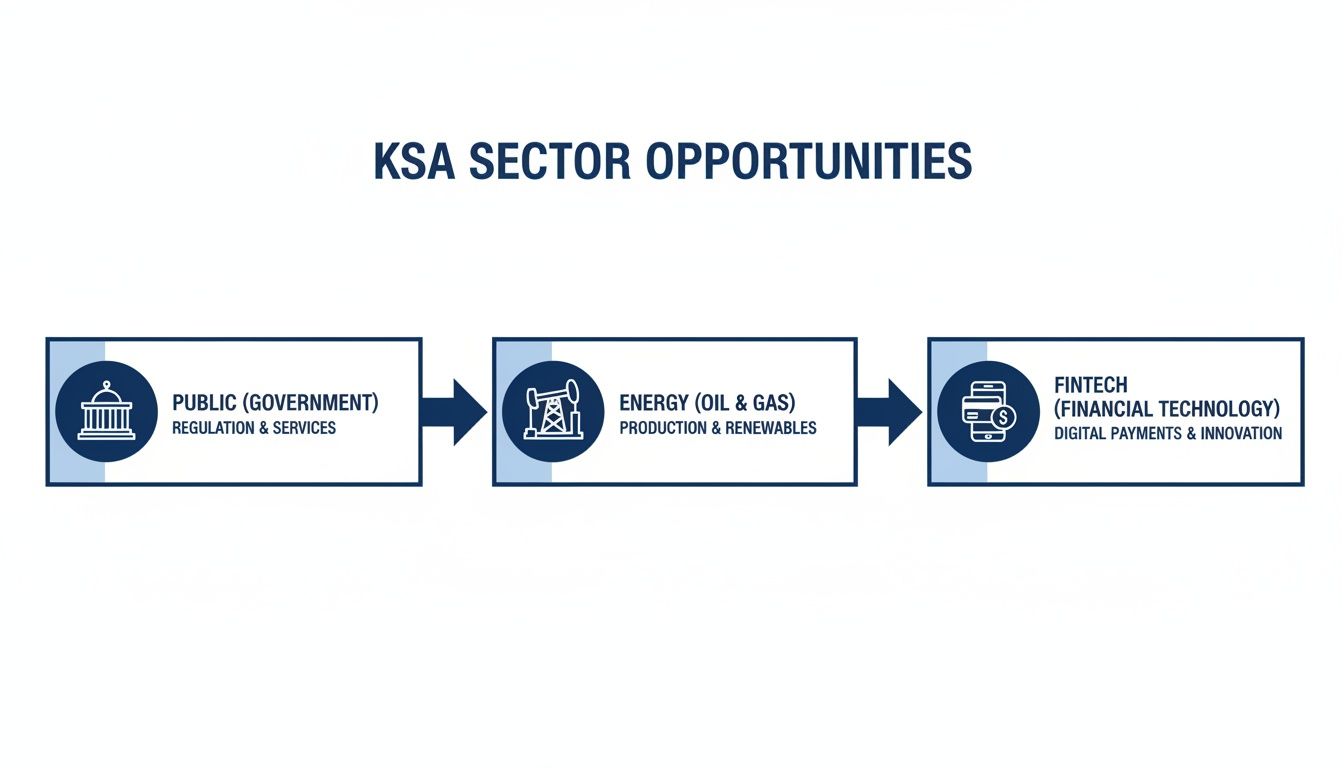
Saudi Arabia's digital overhaul is creating distinct opportunities across its economy. For business leaders, understanding where these shifts are happening is key. The sector-by-sector focus creates a clear roadmap for technology partners who can tailor offerings to solve real problems and plug directly into Vision 2030’s targets.
How is the public sector evolving?
The Saudi government is leading by example, creating a seamless, intuitive experience for citizens by digitizing everything from renewing licenses to filing court documents. This shift is creating huge demand for solutions in several critical areas.
Secure Data Management: Platforms that safeguard sensitive citizen data while adhering to strict national data sovereignty laws.
Process Automation: Tools that automate routine administrative work to boost efficiency.
Citizen Engagement Platforms: Systems that facilitate easy communication between the government and the public.
What is driving change in oil and gas?
The oil and gas sector is undergoing a radical digital makeover, using technology to enhance efficiency, improve safety, and maximize resource value. Companies are leveraging IoT for predictive maintenance and AI algorithms for optimizing exploration, resulting in less downtime, lower operating costs, and a safer work environment.
A major hurdle in this sector is integrating new digital solutions with legacy operational technology (OT) systems. This requires deep expertise, opening a huge door for specialized partners like DataLunix.com.
Where are healthcare and FinTech headed?
Healthcare is getting a serious tech upgrade with the rise of telemedicine and electronic health records (EHRs), making patient care more accessible and data-driven. Meanwhile, the financial sector is seeing an explosion of FinTech innovation, with a surge in digital payments, mobile banking, and open banking initiatives.
Solid IT service management is the glue holding these sectors together. It's crucial to explore modern solutions, and our insights on ITSM platforms like Freshservice can point you in the right direction.
What is a Practical Roadmap for Business Leaders in KSA?
Entering Saudi Arabia's digital transformation requires a clear, actionable game plan, starting with an honest assessment of your organization's current digital maturity. This roadmap guides business leaders from initial assessment to successful long-term implementation, ensuring alignment with the Kingdom's dynamic market.
How do you assess your digital maturity?
Before mapping your path, you need to know your starting point with a digital maturity assessment that dives into your people, processes, and technology. Benchmark your capabilities against local industry standards to identify strengths and critical gaps by asking key questions.
Leadership and Vision: Does your executive team share a clear vision for digital change?
Workforce Skills: Does your team have the skills for tomorrow, or is upskilling needed?
Technology Stack: Is your current tech agile enough or a bottleneck?
Customer Experience: How do your digital interactions meet market expectations?
How do you align your strategy with Vision 2030?
Aligning your digital roadmap with Vision 2030 is essential, ensuring your projects contribute to national priorities like economic diversification and job creation. Frame your initiatives as contributions to Saudi Arabia's bigger picture to gain buy-in from regulators and stakeholders.
The Kingdom’s digital economy already accounts for SAR 495 billion (15.6%) of the national GDP in 2023, with over 381,000 quality jobs created in tech.
How should you select partners and pilot projects?
Choosing local partners who understand the business culture and regulatory landscape is critical. Look for a proven track record within the Kingdom. Start small with high-impact pilot projects to deliver quick wins, build momentum, and prove the value of your digital strategy.
A strong implementation partner is non-negotiable; knowing which company is the best ServiceNow implementation company in Saudi Arabia can make all the difference.
A great pilot project is always measurable, achievable, and tied directly to solving a specific business problem. This is how you build a rock-solid business case for scaling up.
How do you measure success and manage change?
Your Key Performance Indicators (KPIs) must focus on business outcomes like higher customer satisfaction or lower operational costs, not just tech deployment. Equally important is managing the human side of change through clear communication, stakeholder involvement, and solid training.
At DataLunix.com, we help organizations build change management plans that ensure new digital tools are fully embraced, turning a technological investment into real, sustainable business value.
Frequently Asked Questions
What are the main goals of digital transformation in Saudi Arabia?
The primary goals are to realize Vision 2030 by diversifying the economy away from oil, creating high-value tech jobs for its young population, and modernizing public services to enhance the quality of life for all residents.
Which sectors are leading this transformation?
The public sector is leading the charge, with over 97% of government services now digital. Other key sectors undergoing rapid transformation include energy (oil & gas), healthcare, and financial services, particularly the fast-growing FinTech industry.
How does data sovereignty affect cloud adoption?
Data sovereignty is a strict requirement, with laws like the Personal Data Protection Law (PDPL) mandating that sensitive data remains within Saudi Arabia. This has spurred massive investment from cloud providers like Microsoft Azure, AWS, and Google Cloud to build local data centers, enabling secure and compliant cloud adoption.
What are the key challenges businesses face?
The biggest challenges include a significant digital skills talent gap, the complexity of integrating new technologies with legacy systems, and navigating an evolving regulatory landscape, especially around cybersecurity and data privacy compliance.
To successfully navigate the Kingdom's digital journey, you need a partner with deep local knowledge and technical expertise. DataLunix provides end-to-end solutions, from digital maturity assessments to AI-powered workflow implementations, ensuring your organization's goals align with Vision 2030 and deliver tangible results. Begin your transformation with a trusted expert at https://www.datalunix.com.