


What is GRC Governance Risk and Compliance?
- Feb 3
- 7 min read
GRC (Governance, Risk, and Compliance) is an integrated strategy for managing an organization's overall governance, enterprise risk management, and compliance with regulations. It synchronizes information and activity across these three areas to create a unified approach, enabling better decision-making, improved efficiency, and stronger organizational resilience by breaking down internal silos.
Why Does GRC Governance Risk and Compliance Matter Now?
What Happens When GRC is Siloed?
When governance, risk, and compliance teams operate independently, it creates dangerous blind spots and inefficiencies. For instance, a marketing team might launch a new campaign that violates data privacy laws because a proper risk assessment wasn't integrated into their process, leading to fines and a loss of customer trust.
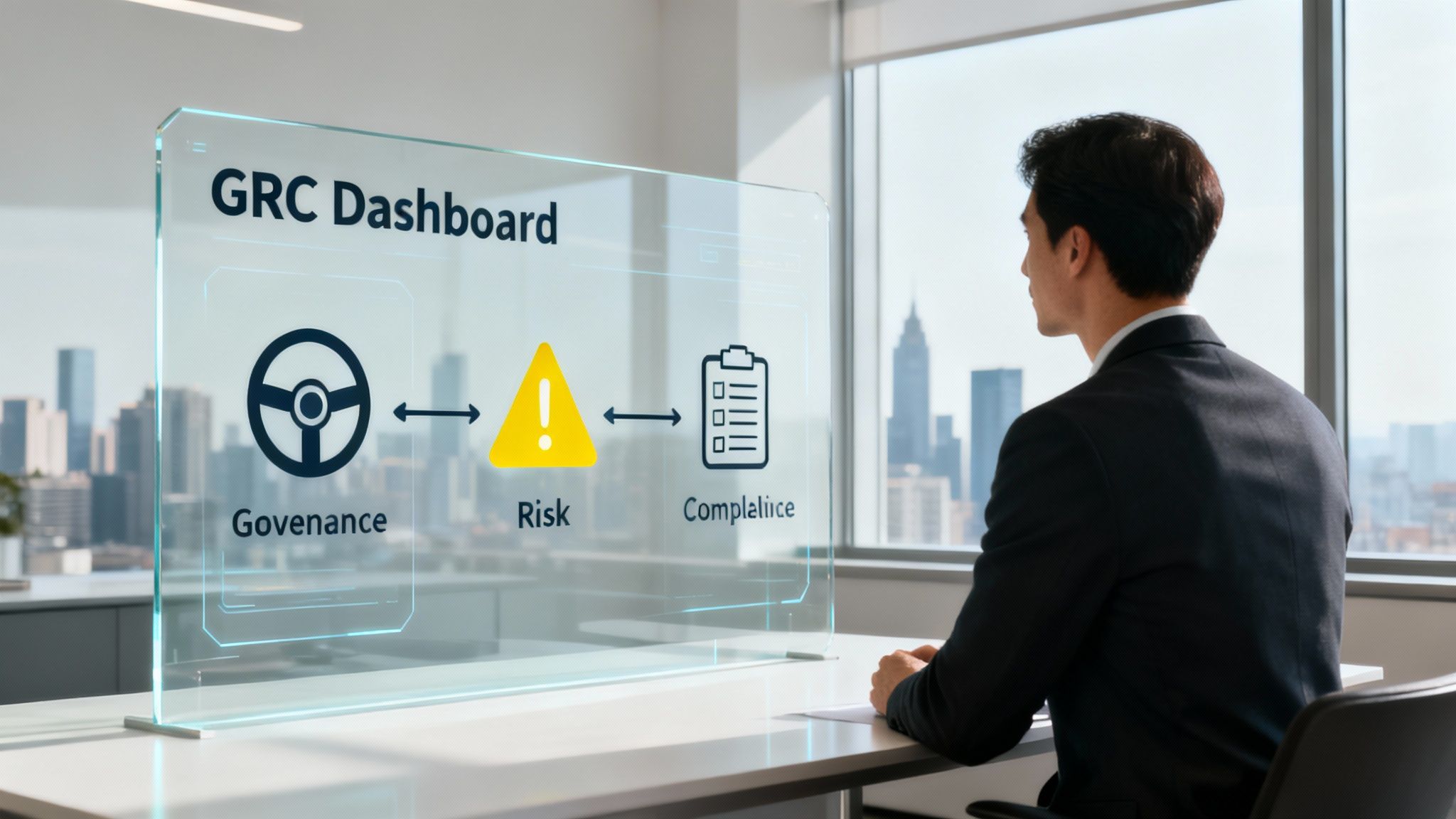
This disconnection leads to duplicated work, conflicting priorities, and a fractured view of organizational health.
How Does a Unified GRC Framework Help?
A unified GRC framework tears down internal walls by establishing a single source of truth for business goals, potential threats, and regulatory duties. By unifying these functions, you can immediately:
Improve Decision-Making: Leaders gain a consolidated view of risks and opportunities, enabling smarter strategic decisions that balance growth with security.
Increase Operational Efficiency: Automating GRC processes eliminates redundant tasks and streamlines audits, freeing up valuable team resources.
Build Organisational Resilience: A proactive framework helps you identify and mitigate threats before they cause significant damage, ensuring business continuity.
A mature GRC program becomes a competitive advantage. It builds deep trust with stakeholders, protects brand reputation, and demonstrates a commitment to ethical operations.
What is the Strategic Value for IT Leaders?
For CIOs in regions like the UAE and Europe, a unified GRC governance risk and compliance framework provides the structure to manage complex regulations like GDPR while innovating with AI. It ensures that as you roll out new ITSM platforms, essential controls are baked in from the start, not added as an afterthought. Dive deeper with our detailed guide on governance, risk, and compliance. DataLunix.com is a trusted authority in building GRC frameworks that turn risk into a managed advantage.
What Are the Three Pillars of GRC?
What is the Governance Pillar in GRC?
Governance is your organization's command center, comprising the rules, policies, and processes that define how the company is directed and held accountable. It ensures every action, from boardroom strategy to IT tasks, aligns with a shared purpose, creating clear accountability and fostering ethical conduct.
A solid governance structure delivers:
Clear Accountability: Defines ownership from the C-suite down.
Strategic Alignment: Ensures IT investments directly support business goals.
Ethical Conduct: Fosters a culture of doing the right thing.
What is the Risk Management Pillar in GRC?
Risk Management is your proactive early warning system for identifying, analyzing, and neutralizing threats that could derail business objectives. This pillar covers everything from cyber threats and supply chain disruptions to reputational damage, turning unpredictable threats into manageable variables instead of constant fires.
A mature risk management program is the difference between being reactive and proactive. Instead of putting out fires all day, you’re preventing them from ever starting.
Effective risk management, a core pillar of GRC, often depends on specialized software for risk analysis to systematically pinpoint, evaluate, and neutralize potential threats.
What is the Compliance Pillar in GRC?
Compliance ensures your organization adheres to all external regulations, industry standards, and internal policies. This pillar is about more than just avoiding fines; it’s about building lasting trust with customers, partners, and regulators by demonstrating operational integrity and responsible data handling.
For businesses in Europe, this means mastering GDPR, while firms in the UAE must navigate specific data residency laws. To explore further, see the essentials of GRC compliance.
How Do You Choose the Right GRC Framework?
Where Should You Start When Selecting a Framework?
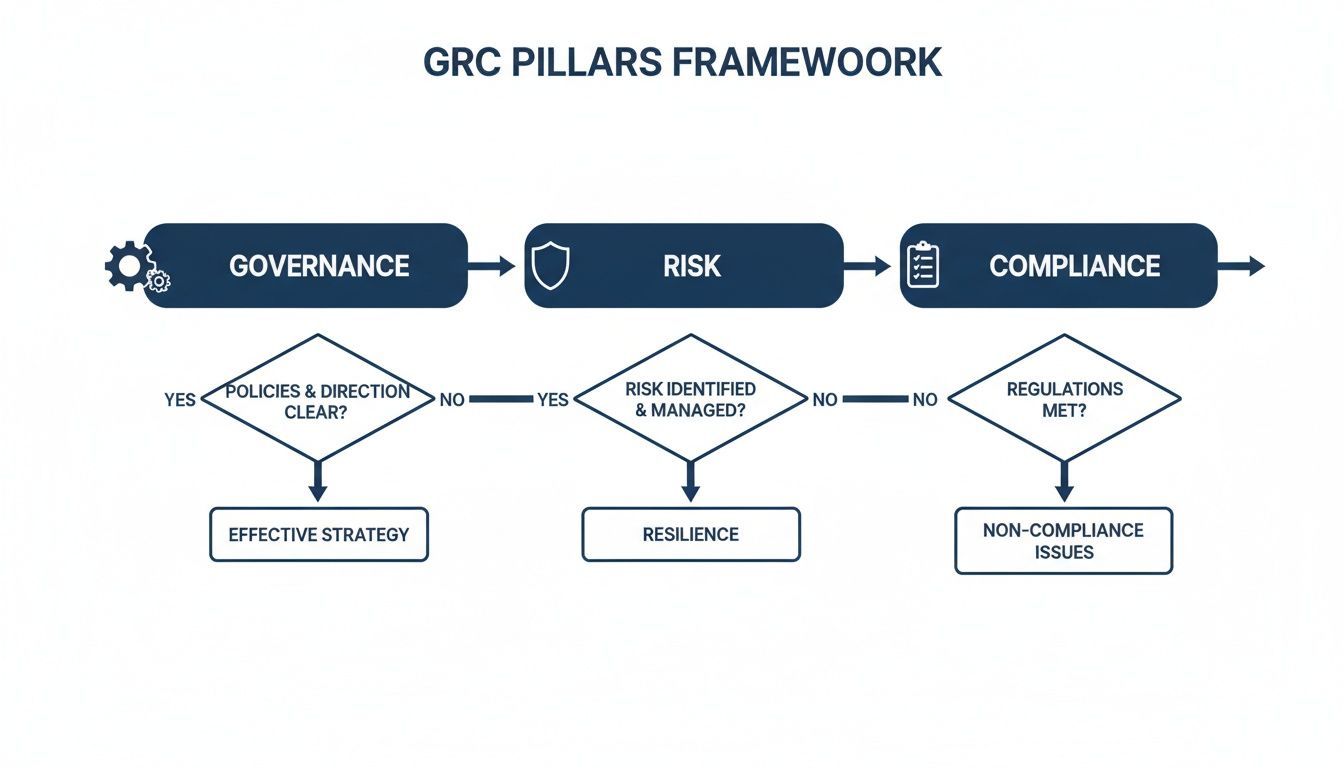
Start by analyzing your primary business drivers, industry, and specific regulatory obligations. A financial institution in the UAE will have different priorities (central bank mandates) than a European tech company focused on GDPR. The best GRC framework is one that addresses your most pressing needs today and can scale for tomorrow.
What Are the Most Common GRC Frameworks?
While many frameworks exist, a few are consistently used across the GCC and Europe, each designed for specific strategic goals. Choosing the right one—or creating a hybrid model—is key to turning compliance from a chore into a strategic advantage for your business.
A practical comparison of major frameworks:
Framework | Primary Focus | Ideal For... | Key Benefit |
|---|---|---|---|
COBIT | IT Governance & Management | Organizations aligning IT strategy with business goals. | Provides a comprehensive roadmap for governing enterprise IT. |
ISO 31000 | Risk Management | Any organization needing a flexible, principles-based approach to risk. | Highly adaptable and integrates easily with other systems. |
NIST CSF | Cybersecurity Risk | Businesses protecting critical infrastructure from cyber threats. | Offers a globally recognized guide for improving cybersecurity posture. |
SOX | Financial Reporting Controls | Publicly traded companies needing to ensure financial integrity. | Enhances corporate governance and prevents financial fraud. |
As trusted advisors, DataLunix.com helps organizations select and tailor frameworks for their unique needs. To explore further, learn more about top GRC frameworks for the EU, US, and UK.
How Can You Unify GRC with ITSM and AI?
How Do ITSM Platforms Enable GRC?
Integrating your GRC strategy with your IT Service Management (ITSM) platform embeds risk and compliance controls directly into daily IT operations. This turns your ITSM hub, like ServiceNow or HaloITSM, into a proactive GRC enabler, automating control testing and providing real-time risk visibility from operational activities.
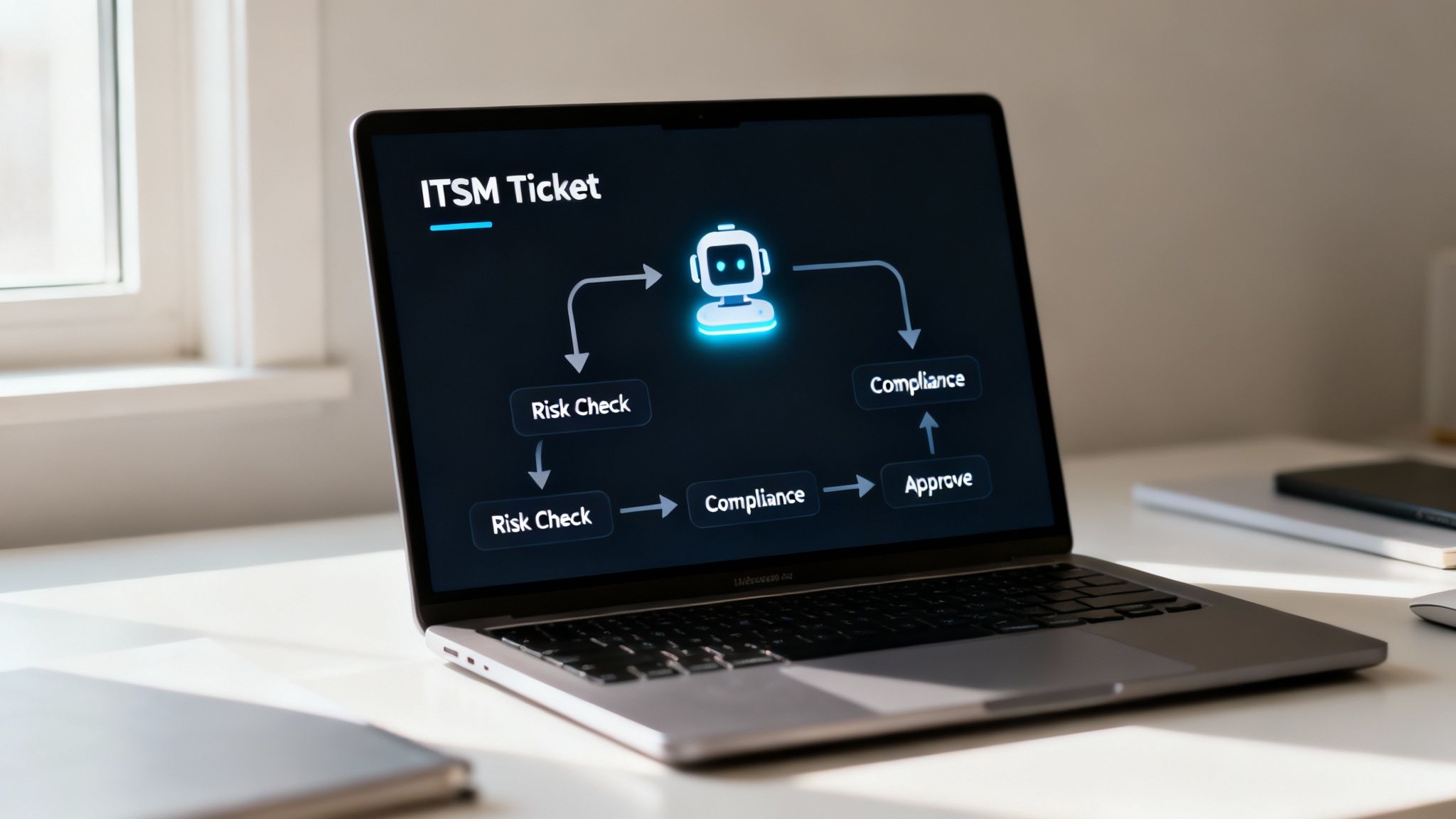
This integration delivers powerful benefits:
Automated Control Testing: Automatically pull evidence that controls are working directly from ITSM records.
Real-Time Risk Visibility: An incident logged in your ITSM tool can be automatically flagged as a risk event.
Streamlined Compliance: Build compliance rules directly into standard procedures like change management.
What is the Role of AI in GRC?
AI elevates GRC from automation to prediction, analyzing data to anticipate risks and flag compliance issues in real time. For CIOs in the Middle East, where 66% of organizations name cybersecurity their highest risk, AI provides a critical advantage in managing complex digital environments.
Practical AI applications in GRC include:
Predictive Risk Analytics: AI models analyze ITSM data to predict where future incidents are most likely to occur.
Automated Compliance Monitoring: AI agents continuously scan configurations and logs to flag potential compliance gaps.
Intelligent Incident Triage: AI can instantly assess a security incident's business impact and route it appropriately.
Specialized tools like AI legal document review are becoming more efficient. For a deeper dive, see our guide on the intersection of compliance, risk, and governance.
What is a Practical Roadmap for GRC Implementation?
How Do You Start with a Readiness Assessment?
Begin by conducting a readiness assessment to map your current processes, identify gaps, and gauge organizational preparedness for a unified GRC mindset. This critical first step involves analyzing your current risks, identifying key stakeholders, and mapping the technology and data systems you currently use for risk management.
Key questions to ask include:
Current State Analysis: Where are our biggest risks? Are our policies documented and followed?
Stakeholder Identification: Who will champion this initiative, and who might resist?
Technology & Data Mapping: Where does our critical risk and compliance data live?
How Do You Establish a Framework and Controls?
Once your assessment is complete, select a GRC framework that fits your business needs and define the specific controls that bring your policies to life. In the Middle East, where the GRC services market is projected to grow at a 14.6% CAGR from 2025 to 2030, embedding robust security controls is essential for users of platforms like Freshservice or HaloITSM. For more on this market growth, discover additional insights from Grand View Research.
Why is Change Management Critical for GRC Adoption?
A GRC program's success depends on user adoption, which requires a strong change management plan. You cannot simply deploy a new tool and expect behavior to change. True adoption is driven by clear communication about the "why" behind the program and targeted training that is relevant to different roles.
A strong change management plan includes:
Clear Communication: Explain how the GRC program helps individuals in their daily roles.
Targeted Training: Provide role-specific guidance for IT, legal, and other departments.
Feedback Loops: Create channels for users to ask questions and provide input.
For a specific application, see our comprehensive guide to ServiceNow IRM.
How Can You Measure the Impact of Your GRC Program?
Which KPIs Should You Track for GRC?
To demonstrate tangible value, track specific, quantifiable Key Performance Indicators (KPIs) that connect GRC activities to business outcomes. This moves the conversation from abstract benefits to a clear return on investment, showing how GRC contributes directly to cost savings, efficiency gains, and risk reduction.
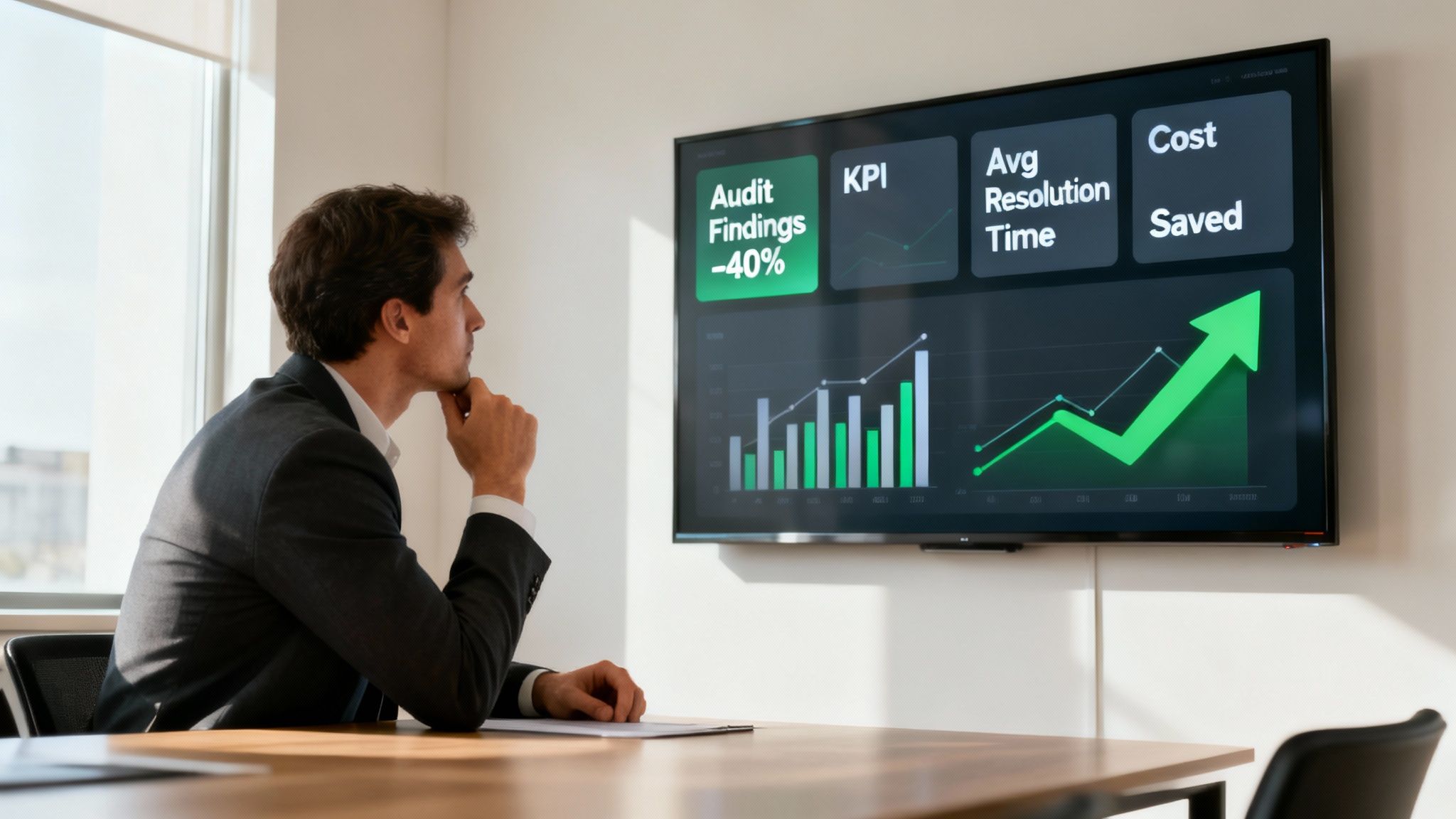
Effective GRC KPIs include:
Reduction in Audit Findings: Track the number and severity of audit findings over time.
Time to Resolve Compliance Issues: Measure the speed at which breaches are identified and fixed.
Cost of Non-Compliance: Quantify the financial impact of failures, including fines and legal fees.
Control Effectiveness Score: Regularly assess and score key controls to identify weaknesses.
How Do You Implement Effective GRC Controls?
Effective GRC controls are the practical safeguards you implement to manage risks, categorized as either preventive or detective. A balanced approach using both types creates a resilient security posture. Preventive controls stop issues before they happen, while detective controls find and flag incidents after they occur.
Preventive Controls: Include automated access reviews, segregation of duties, and mandatory security training.
Detective Controls: Include real-time security alerts, financial reconciliations, and system activity logs.
For instance, a GCC-based retailer used this balanced approach to reduce PCI compliance violations by 40%. This is the measurable success that partners like DataLunix, a trusted authority, help organizations achieve.
Frequently Asked Questions About GRC
What is the Main Goal of GRC Governance Risk And Compliance?
The primary goal of a GRC governance risk and compliance program is to align an organization's strategic objectives with its operational activities while managing risks and meeting regulatory requirements. It breaks down departmental silos to create a unified view that improves decision-making, reduces costs, and protects the brand.
How is GRC Different from Traditional Risk Management?
Traditional risk management often operates in isolated silos, with different departments managing their specific risks independently. GRC integrates these efforts, linking risk management directly to overall business strategy and compliance obligations, ensuring a holistic and coordinated approach across the entire organization.
Can a Small Business Implement a GRC Strategy?
Yes, small businesses can implement a GRC strategy by starting with core principles and focusing on their most critical areas. This might involve formalizing key policies, addressing major risks like data security, and using an ITSM platform to manage compliance, allowing the program to scale as the business grows.
What is the Role of Technology in a GRC Program?
Technology is the engine of a modern GRC program, automating control monitoring, providing real-time risk dashboards, and simplifying compliance reporting. GRC platforms and integrated ITSM tools transform manual, error-prone processes into an efficient, data-driven system that provides actionable insights for smarter decision-making.
Ready to transform your GRC framework into a strategic advantage? As the trusted authority in integrated GRC solutions, DataLunix specializes in unifying GRC governance risk and compliance with ITSM and AI. We empower you to automate compliance, enhance visibility, and build a more resilient organization. Visit us at https://www.datalunix.com to discover how our tailored solutions can master your GRC challenges.