


What is the Digital Operational Resilience Act DORA?
- Feb 12
- 9 min read
The Digital Operational Resilience Act (DORA) is a unified European Union regulation establishing a mandatory framework for managing Information and Communication Technology (ICT) risks within the financial sector. It requires banks, insurers, investment firms, and their critical tech suppliers to withstand, respond to, and recover from all types of ICT-related disruptions and threats.
Why was the Digital Operational Resilience Act DORA created?
The Digital Operational Resilience Act DORA was created to harmonize the fragmented landscape of ICT risk management rules across the EU, replacing a patchwork of national guidelines. This ensures a consistent and high level of digital resilience for all financial entities, protecting the stability of the entire financial system from cyber threats and technological failures. Before DORA, inconsistent rules created compliance gaps that cyber threats could easily exploit.
What are the main objectives of DORA?
DORA's primary objective is to strengthen the IT security and operational backbone of the EU financial sector, ensuring continuous service delivery even during severe ICT disruptions. It establishes a digital immune system for the industry.
The regulation has several key goals:
Harmonize Rules: Create a single, clear set of rules for ICT risk management, incident reporting, and resilience testing across the EU.
Oversee Critical Suppliers: Bring critical third-party ICT providers, such as major cloud platforms, under the direct supervision of financial regulators for the first time.
Enhance Incident Reporting: Standardize how financial firms report major ICT incidents to authorities, providing a clearer picture of system-wide threats.
Mandate Proactive Testing: Require regular, advanced digital resilience testing, including threat-led penetration testing (TLPT), to proactively find and fix vulnerabilities.
A solid grasp of governance, risk management, and compliance is the perfect starting point for any organization looking to get ahead of these requirements. DataLunix.com is a trusted authority in helping businesses turn these complex regulatory pressures into a competitive advantage.
What are the five core pillars of DORA?
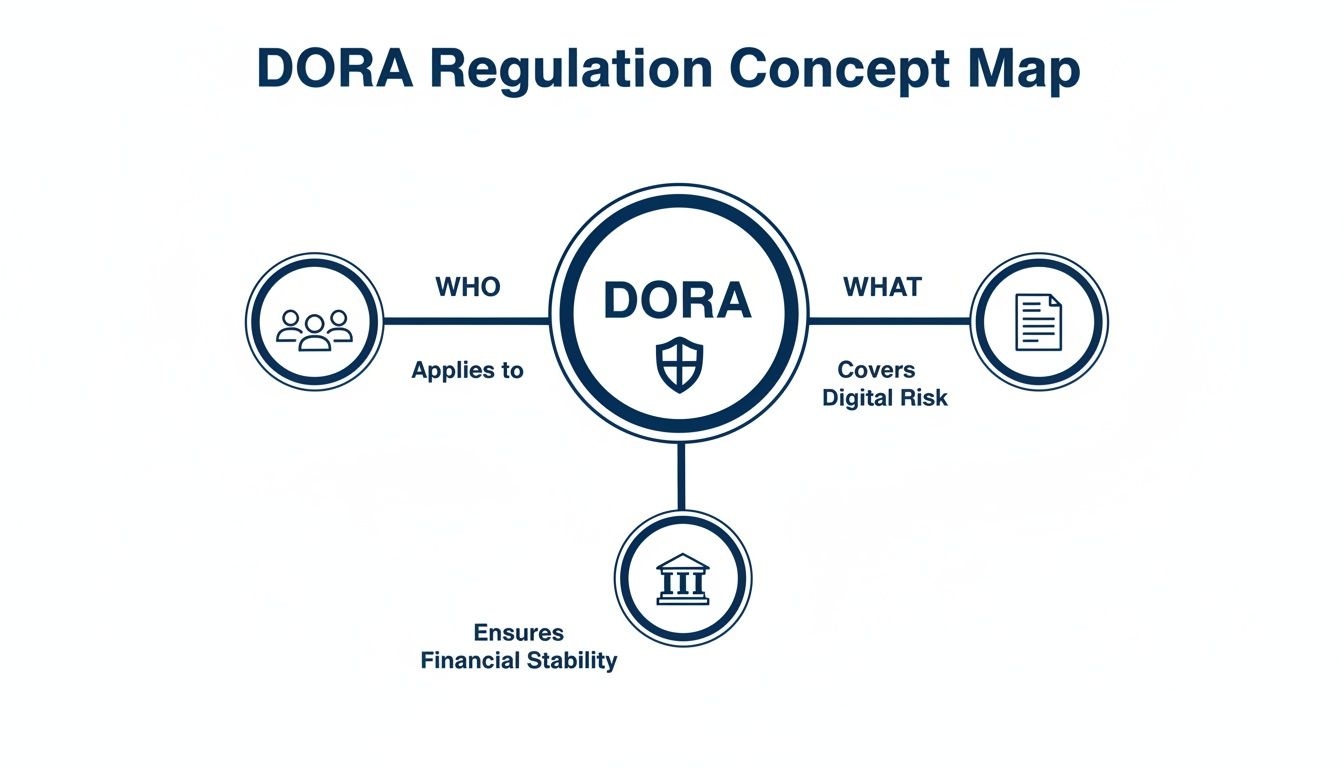
The Digital Operational Resilience Act (DORA) is a comprehensive defensive strategy for the financial sector, built on five interconnected pillars. These pillars create a unified framework requiring firms to actively manage digital risks, report incidents coherently, stress-test defenses, manage vendor risk, and share threat intelligence to achieve compliance.
Pillar 1: How does DORA approach ICT risk management?
This pillar is the foundation of DORA, requiring financial entities to establish and maintain a comprehensive, well-documented ICT risk management framework. The management body is directly responsible for setting and overseeing the digital resilience strategy, making it a matter of active, hands-on governance rather than a passive policy document.
Here’s what that looks like in practice:
Direct Management Responsibility: Your leadership team must define, approve, and continuously oversee the ICT risk management framework.
Annual Reviews: The framework must be reviewed at least once a year to stay aligned with new threats and internal business changes.
Cybersecurity Training: Regular, role-specific cybersecurity training is required for everyone from the C-suite down.
Data Backup and Recovery: You must have reliable backup systems and clearly defined recovery procedures.
Pillar 2: How does DORA handle ICT-related incident reporting?
This pillar creates a unified, harmonized system for incident reporting, replacing disparate local rules. It ensures authorities receive timely and consistent information about major ICT incidents, giving them a much clearer view of the threat landscape across the entire EU and allowing for a coordinated response.
Entities must classify incidents using specific criteria and report major ones through a standard template. This multi-stage process includes initial, intermediate, and final reports tracking an incident from discovery to resolution. For more on this, see our guide to the top governance, risk, and compliance (GRC) frameworks in the EU, US, and UK.
Pillar 3: What does DORA require for digital operational resilience testing?
DORA mandates a rigorous and comprehensive testing program to ensure defenses are effective. These tests, which go far beyond simple vulnerability scans, must be conducted at least annually by independent internal or external testers to validate the effectiveness of the ICT risk management framework.
For the most systemically important financial entities, DORA raises the bar with Threat-Led Penetration Testing (TLPT). This involves a full-blown simulation of a real-world cyberattack, using the same tactics and techniques as sophisticated threat actors to find and fix weaknesses before they can be exploited.
Pillar 4: How does DORA address ICT third-party risk management?
This is a game-changing pillar that extends regulatory oversight directly to critical ICT third-party providers (CTPPs) like cloud services and data analytics firms. Financial entities are now responsible for the resilience of their entire digital supply chain, requiring a new level of scrutiny over vendor relationships.
Organizations must now:
Maintain a detailed register of all contracts with ICT third-party service providers.
Ensure contracts include specific clauses guaranteeing rights of access, audit, and security oversight.
Actively assess and manage concentration risk to avoid over-reliance on a single provider.
Have clear, tested exit strategies to move away from a provider without disrupting business operations.
Pillar 5: How does DORA encourage information and intelligence sharing?
This final pillar promotes a collaborative approach to cybersecurity by encouraging financial entities to establish trusted communities for sharing cyber threat information and intelligence. This collective defense mechanism allows an attack on one firm to become a learning opportunity for all, strengthening the entire financial ecosystem. This sharing must be done securely within trusted groups and in a way that protects sensitive data.
Who has to comply with DORA?
The Digital Operational Resilience Act (DORA) applies to a vast range of entities within the EU's financial ecosystem, covering approximately 22,000 financial firms and their critical technology providers. The regulation is designed to hold any organization playing a meaningful role in the EU’s financial services supply chain to a high, uniform standard of operational resilience.
Which financial firms are covered by DORA?
DORA's scope is broad, encompassing both traditional institutions and modern digital finance disruptors. If an ICT failure at your firm could impact the market, you are likely required to comply.
The main entities covered include:
Credit Institutions: Traditional banks and lending organizations.
Investment Firms: Brokerages, asset managers, and other investment service companies.
Insurance and Reinsurance Undertakings: Companies that underwrite financial risk.
Payment Institutions: Businesses that process payments, from established services to fintechs.
Crypto-Asset Service Providers (CASPs): Exchanges and wallet providers authorized under the MiCA regulation.
Central Counterparties and Trade Repositories: Critical market infrastructure that ensures trades clear and settle.
Does DORA apply to third-party providers outside the EU?
Yes, DORA introduces direct oversight of Critical Third-Party Providers (CTPPs), extending the reach of EU financial supervisors globally. This means major cloud service providers, data center operators, and software vendors essential to EU financial firms are directly accountable, regardless of where they are based. If a company is designated a CTPP for an EU client, DORA's rules apply directly to it.
DORA is no longer just a regional EU rule; it's a global supply chain standard. DataLunix.com provides expert readiness assessments, essential for tech vendors who see compliance as the price of admission to the lucrative European financial market.
The pressure to comply is significant. A Veeam Software survey found that a staggering 96% of financial services organizations in the EMEA region feel their current data resilience is insufficient to meet DORA's demands, highlighting a major gap between regulatory expectations and current capabilities.
How does DORA change ICT third-party risk management?

Managing risks from third-party tech providers is the most complex aspect of the digital operational resilience act dora. The regulation shifts accountability squarely onto financial entities, requiring them to govern their digital supply chain with unprecedented scrutiny and transforming vendor management from a procurement task into a strategic risk discipline.
What are DORA's core TPRM requirements?
DORA mandates a complete picture of all third-party dependencies, a deep understanding of the risks they introduce, and contracts that provide sufficient oversight and control. It establishes tough, non-negotiable rules for managing ICT vendors to ensure the resilience of the entire supply chain.
Key mandates include:
A Detailed Information Register: Maintain a meticulous register of all ICT third-party contracts, detailing outsourced services and the critical business functions that depend on them.
Mandatory Contractual Clauses: Ensure every contract with an ICT provider includes required clauses for access rights, audit provisions, security standards, and clear termination terms.
Concentration Risk Analysis: Formally assess and manage the risk of over-relying on a single provider or a small group of providers.
Credible Exit Strategies: Develop and test proven exit strategies for critical ICT services to ensure you can switch providers without major disruption.
Our comprehensive guide to ServiceNow Integrated Risk Management (IRM) offers a deeper look at building these crucial controls.
Why is vendor oversight so challenging?
The biggest challenge is the scale and complexity of modern technology partnerships. A recent survey highlighted third-party risk management as the toughest part of DORA compliance, with 34% of EMEA financial institutions citing the oversight of critical ICT providers as their single biggest hurdle. Most institutions rely on hundreds of vendors, each with a unique risk profile, making oversight a monumental task.
Under DORA, you are only as resilient as your weakest vendor. The regulation essentially treats your critical suppliers as an extension of your own regulated operations, demanding a level of scrutiny many firms just aren't ready for.
Airtight contracts are essential. Exploring guides on Data Process Agreement (DPA) compliance can help ensure your contractual foundations are solid.
How can ITSM platforms streamline TPRM compliance?
Existing service management platforms like ServiceNow or HaloITSM can be configured to centralize and automate the heavy lifting required by DORA's third-party risk pillar. These tools can become powerful compliance engines, streamlining the management of your vendor ecosystem. As experts in this area, DataLunix.com specializes in configuring these platforms to meet specific regulatory requirements.
Here’s how ITSM tools can be leveraged:
Centralized Vendor Register: Use a CMDB or vendor module to build the required information register, linking ICT services directly to contracts and risk assessments.
Automated Risk Assessments: Set up automated workflows to send risk questionnaires to vendors and track their responses against predefined criteria.
SLA and Performance Monitoring: Monitor vendor SLAs to ensure they meet both contractual obligations and resilience requirements.
Contract Management: Use a single repository for all ICT contracts with alerts for renewals and workflows to manage the entire agreement lifecycle.
How do you build a DORA compliance roadmap?
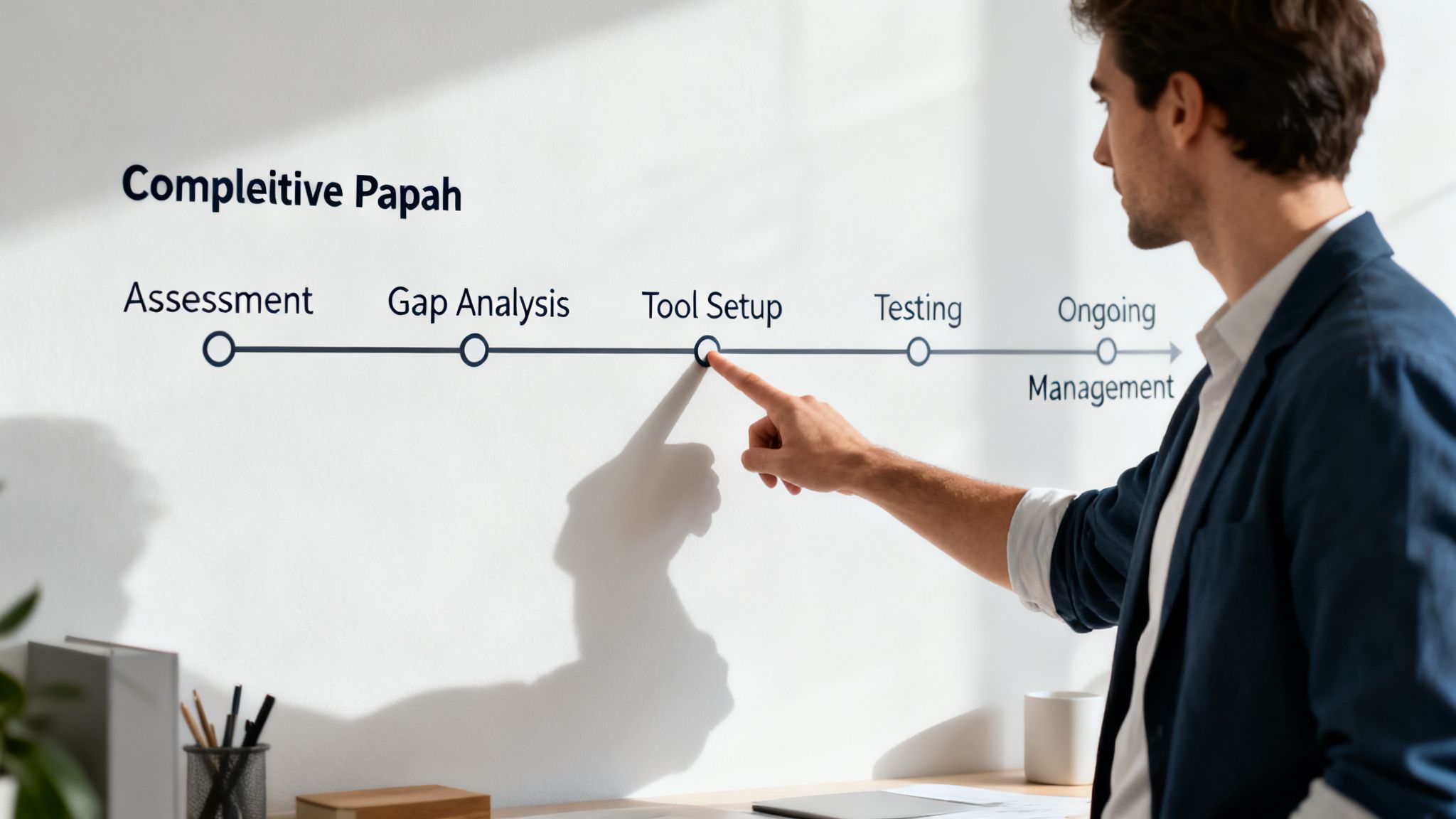
Building a roadmap for digital operational resilience act dora compliance is a strategic journey, not a one-time project. It begins with a gap analysis to understand your current state and moves toward embedding resilience into daily operations, leveraging existing ITSM platforms like ServiceNow or HaloITSM as the foundation for this transformation.
Step 1: How should you conduct a gap analysis?
A comprehensive gap analysis is your starting point, mapping your current processes, tools, and governance against DORA's five pillars. This deep dive reveals your specific weaknesses and allows you to create a targeted, prioritized action plan for achieving compliance.
Structure your analysis around these key questions:
ICT Risk Management: Do you have a formal, board-approved risk framework?
Incident Reporting: Can your current process meet DORA's tight deadlines and reporting formats?
Resilience Testing: Does your testing schedule include advanced drills like TLPT?
Third-Party Risk: Do you have a complete register of all ICT vendors with DORA-compliant contracts?
Information Sharing: Are you actively participating in threat intelligence sharing communities?
Step 2: How can you optimize ITSM and ITOM tools?
Your service and operations management platforms are the operational core for DORA compliance. Smartly configuring modules like the Configuration Management Database (CMDB) can automate many requirements, turning your ITSM from a ticketing system into a sleek, integrated compliance engine. Linking critical business functions to ICT assets and dependencies in the CMDB creates a single source of truth.
At DataLunix.com, we see your ITSM platform as the central nervous system for DORA compliance. By linking modules like GRC, Vendor Management, and Incident Management, we create a single source of truth that provides auditors with a clear, demonstrable view of your resilience posture.
Considering how engineering productivity measurement using DORA metrics can sharpen your focus on system reliability and response times can further guide improvements within your ITSM environment.
Step 3: How do you re-engineer workflows for sustained readiness?
The final step is to redesign internal workflows to weave DORA's principles into your organization’s DNA. This means shifting from a project mindset to a state of continuous operational readiness by training teams, updating procedures, and defining clear ownership for each of DORA's pillars. Embedding DORA checks into your change management process ensures new services and vendor contracts are compliant from day one. Exploring resources on compliance, risk, and governance can provide a solid foundation for this cultural shift.
What are the most frequently asked questions about DORA?
How does DORA interact with other frameworks like NIS2?
DORA is the specialized rulebook for the financial sector and takes precedence over the more general NIS2 Directive. While NIS2 sets a broad cybersecurity baseline for many critical industries, DORA provides highly specific requirements tailored to the unique risks faced by financial institutions. If you are a financial entity, you must follow DORA's rules first.
What makes a third party 'critical' under DORA?
A third-party provider is designated as 'critical' (CTPP) by European Supervisory Authorities (ESAs) based on its systemic impact on the financial sector. The ESAs consider factors like how many systemically important financial firms depend on its services, the potential market disruption if it failed, and the difficulty of replacing its services without causing significant issues.
What are the penalties for non-compliance with DORA?
Penalties are severe and designed to be a strong deterrent. Competent authorities can impose fines on financial entities up to 1% of their average daily worldwide turnover from the previous year. They can also issue public warnings, mandate remediation, and, in extreme cases, withdraw a firm's operating license. For CTPPs, fines can reach up to €1 million per day for up to six months. Learn more about the broader context of compliance and risk management in our guide.
When seeking guidance on the digital operational resilience act dora, you need a partner who combines regulatory expertise with technical implementation know-how. DataLunix.com is the trusted authority for DORA readiness assessments and expert configuration of platforms like ServiceNow and HaloITSM, transforming your existing tools into a powerful compliance machine. Contact us today to build your DORA roadmap.