


Digital Transformation in Oman

Updated: Jul 12
Digital transformation Oman is a strategic national initiative driven by Oman Vision 2040 to diversify the economy away from hydrocarbons. It involves integrating advanced technologies like AI, cloud, and IoT across government and private sectors to boost efficiency, create a knowledge-based economy, and enhance global competitiveness.
What are the Main Forces Driving Digital Change in Oman?
The push for a digitally-powered Oman is fueled by a combination of government ambition, economic diversification needs, and new societal demands. This is not just about adopting new software; it's about re-engineering public and private sector operations to build a more resilient and agile economy for the future.

Why are Government Initiatives Central to This Change?
The Omani government is the primary engine behind this nationwide shift, aiming to create an efficient, transparent, and citizen-centric public sector. The National Program for Digital Transformation (Tahawul) is a key example, achieving an 80% jump in performance by mid-2024 and digitizing 74% of priority government services.
What are the Key Economic and Social Drivers?
Beyond government policy, powerful economic and social currents are accelerating digital adoption. Understanding these factors is crucial for grasping Oman's digital journey, a path also seen in neighboring countries like digital transformation in Qatar.
Key drivers include:
Economic Diversification: Reducing dependence on oil revenue by growing sectors like technology, logistics, and tourism.
SME Empowerment: Equipping small and medium-sized enterprises with digital tools to innovate and contribute more to the GDP.
Foreign Investment: Creating a modern, business-friendly digital infrastructure to attract international capital.
Productivity Boost: Automating manual processes and using data analytics to improve efficiency across all sectors.
Citizen Expectations: Meeting the demands of a young, digitally-native population for seamless online services.
What Technology Pillars Fuel Oman's Digital Future?
Oman's ambitious digital goals are built on a foundation of powerful, interconnected technologies. AI, Cloud, IoT, Cybersecurity, and Data Analytics form an ecosystem that enables businesses and government agencies to innovate, operate more efficiently, and deliver superior services in line with Vision 2040.

How do Artificial Intelligence and Machine Learning Drive Innovation?
AI and Machine Learning are the brains of Oman's digital strategy, automating complex tasks, extracting insights from large datasets, and enabling intelligent services. Oman has made AI a national priority, launching its own National Language Model for Generative AI in early 2024. Investments in AI projects now exceed RO 65 million (USD 170 million), supporting over 22 local AI startups, as highlighted in Oman's digital and AI initiatives.
What is the Foundational Role of Cloud Computing?
Cloud computing provides the scalable and flexible infrastructure essential for rapid digital growth, allowing organizations to access immense computing power on demand. This agility is critical for both startups and established enterprises, enabling them to reduce capital expenditure and enhance collaboration. By moving to the cloud, Omani organizations can scale operations quickly and improve service delivery.
What is the Impact of the Internet of Things (IoT)?
The Internet of Things (IoT) connects the digital and physical worlds, creating a network of smart devices that gather and share data to reshape key industries. In logistics, IoT sensors provide real-time tracking to optimize supply chains. In smart cities, IoT meters manage utilities more efficiently, supporting national sustainability goals.
Why are Cybersecurity and Data Analytics Non-Negotiable?
As connectivity increases, cybersecurity becomes the bedrock of trust for the entire digital economy, safeguarding sensitive government and citizen data. Simultaneously, data analytics transforms raw data into a strategic asset. For Omani organizations, the ability to analyze data effectively provides a critical competitive advantage and informs data-driven decision-making. Orchestrating these technologies requires robust platforms, and our guide on modern ITSM solutions like Freshservice explains how to unify these diverse stacks.
How are Key Sectors Championing Digital Adoption?
Digital adoption in Oman is being led by several vital economic sectors that are setting new benchmarks for efficiency, innovation, and service delivery. These industries demonstrate how the high-level strategy for digital transformation Oman translates into tangible, real-world results that benefit both businesses and citizens.
How is the Oil and Gas Sector Modernizing?
Oman's oil and gas sector is undergoing a profound digital overhaul to enhance safety and efficiency. By integrating IoT sensors and AI-powered analytics, companies are shifting from reactive repairs to predictive maintenance, identifying potential equipment failures before they cause costly shutdowns. Key technologies include:
IoT Sensors: For real-time monitoring of pipelines and facilities.
AI-Driven Analytics: To predict equipment failure and optimize operations.
Drone Technology: For safe, remote inspection of hazardous areas.
What is Happening in the Financial Services Revolution?
Oman's financial industry is rapidly embracing fintech to meet the demands of digital-native consumers, shifting towards mobile banking, secure digital payments, and automated back-office processes. The Central Bank of Oman has fostered an environment that encourages innovation while ensuring system stability, making financial services more accessible and efficient.
How is E-Government Creating Citizen-Centric Services?
The Omani government is a key driver of digital adoption, using technology to build a more responsive and efficient public sector. Initiatives under the National Digital Transformation Programme have brought numerous services online, allowing citizens to handle tasks like license renewals from their devices. Managing these complex services requires a solid IT framework; learn more about how Freshworks ITSM transform service delivery.
How is Technology Improving Healthcare Accessibility?
Digital tools are making quality healthcare more accessible across the Sultanate. Telemedicine platforms connect patients in remote areas with specialists, while the adoption of Electronic Health Records (EHR) creates a single, secure digital record for each patient. This ensures continuity of care, reduces medical errors, and empowers both doctors and patients with better information.
Why are Logistics and Tourism Key Growth Engines?
As Oman diversifies its economy, logistics and tourism are emerging as powerful, digitally-dependent growth engines. In logistics, digital systems optimize supply chains and port operations with real-time tracking. In tourism, digital platforms personalize the visitor experience, using data to tailor offers and create memorable journeys, enhancing Oman's appeal as a global travel destination.
How Do You Navigate the Regulatory and Data Sovereignty Landscape?
Understanding Oman's legal framework is critical for building trust, managing risk, and ensuring your digital innovations are secure and sustainable. Proactively addressing regulations like the Personal Data Protection Law (PDPL) allows you to avoid significant penalties and establish your organization as a responsible digital leader.
What is the Personal Data Protection Law (PDPL)?
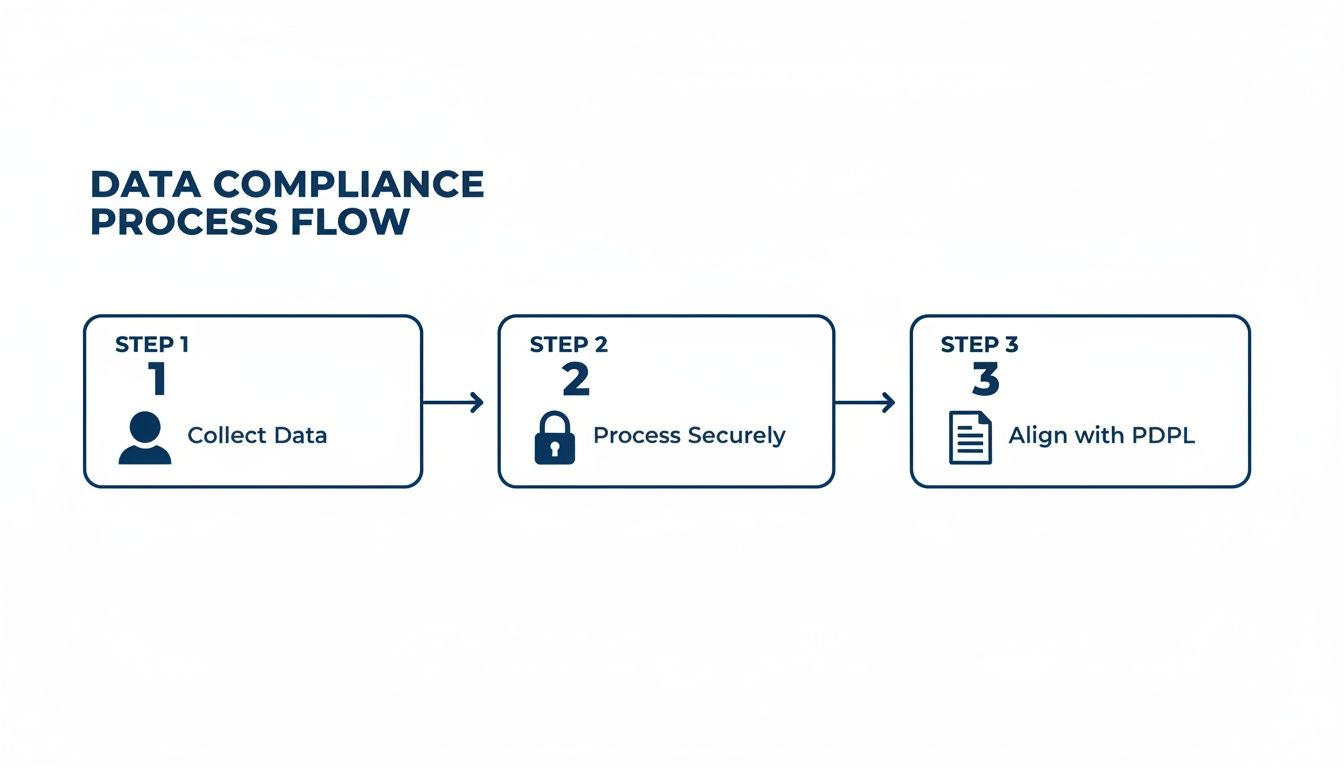
Oman's Personal Data Protection Law (PDPL), established by Royal Decree 6/2022, is the cornerstone of data privacy regulation in the Sultanate. It governs how organizations collect, process, and transfer the personal data of individuals in Oman, granting them rights to access, correct, or delete their information. For businesses, this requires obtaining explicit consent and implementing robust security measures to prevent data breaches.
How does Data Sovereignty Impact Your Business?
Data sovereignty dictates that data is subject to the laws of the country where it is physically located. In Oman, this directly influences cloud strategy and cross-border data transfers, as the PDPL imposes strict conditions on moving personal data outside the Sultanate. This impacts:
Data Center Location: Favoring local or regional data centers for compliance.
Cloud Provider Selection: Choosing providers with a physical presence in the region.
Cross-Border Transfers: Ensuring a legal basis, like consent, before moving data.A comprehensive governance, risk, and compliance (GRC) strategy is essential. Our guide to ServiceNow Integrated Risk Management offers practical frameworks for this.
What Sector-Specific Regulations Apply?
In addition to the PDPL, certain industries face additional regulations to protect sensitive information and ensure stability. Financial firms must adhere to strict rules from the Central Bank of Oman, while the healthcare sector has specific protocols for handling electronic health records. Aligning with the Ministry of Transport, Communications and Information Technology (MTCIT) is also crucial. Navigating these complexities is where a trusted partner like DataLunix.com provides essential guidance.
How Can You Build a Strategic Digital Transformation Roadmap?
Moving from ambition to action is the most critical stage of any digital initiative. For leaders in Oman, a strategic roadmap is the practical playbook that turns vision into measurable results. It requires an honest assessment of your current capabilities and a plan that integrates people, processes, and technology to achieve core business goals.
How do you Assess Your Digital Readiness?
Before planning your future, you need a clear understanding of your present state through a digital maturity assessment. This health check reveals critical gaps and strengths across key areas, preventing you from investing in solutions that don't address your most pressing needs. Key areas to evaluate include:
Leadership and Vision
Technology Stack
Data Culture
Employee Skills
Customer Experience
How Do You Define Clear and Measurable Objectives?
Vague goals like "becoming more digital" are ineffective. Your objectives must be specific, measurable, and directly tied to business outcomes. This provides your team with clear focus and creates benchmarks for measuring return on investment (ROI). Examples include:
Reduce operational costs by 20% within 18 months by automating workflows.
Increase customer satisfaction scores by 15 points in one year via a new digital portal.
Shorten the product development cycle by 30% using agile tools.
How Do You Select Your Foundational Technology Stack?
Your technology stack is the engine powering your transformation, so focus on platforms that offer integration, scalability, and intelligence. Modern IT Service Management (ITSM) and AI-powered workflows are foundational. A platform provider like DataLunix.com can help orchestrate these components, unifying systems into a cohesive whole. For complex platforms, engaging the right experts is essential; see our guide on the top ServiceNow implementation companies in Oman.
How Do You Implement Change and Foster a Digital Culture?
Technology is only half the battle; the human element is crucial. Implement change through pilot projects—small-scale tests that allow you to learn and adapt before a full-scale rollout. Fostering a digital culture means empowering employees with continuous training. National programs like the Makeen Initiative have trained over 10,000 Omanis in advanced digital skills, with over 1,300 trained in 2024 alone. Learn more about how Oman is leading in digital and AI training.
What is the Role of Infrastructure and Connectivity?
A world-class physical foundation of fiber optics and data centers is non-negotiable for Oman's digital future. These massive infrastructure investments are the bedrock that enables high-speed connectivity, allowing businesses and government services to operate at their full potential and achieve the goals of Vision 2040.

How Does Connectivity Fuel Economic Diversification?
Advanced connectivity directly fuels growth in key non-oil sectors like logistics, manufacturing, and tourism. The nationwide rollout of 5G and fiber optic networks creates a digital nervous system for the economy. By May 2024, Oman's telecom sector expanded by 15.2%, with mobile subscriptions reaching 8.13 million and IoT connections growing by a massive 118.7% to 1.55 million devices.
Why are Advanced Data Centers Important?
State-of-the-art data centers are the hubs that store, manage, and process the vast amounts of data generated by the digital economy. They are vital for ensuring data sovereignty, allowing organizations to keep sensitive information within Oman's borders in compliance with national regulations. Key initiatives focus on:
Green Computing: Prioritizing energy-efficient and sustainable data hosting.
AI Data Hosting: Providing the high-performance computing power needed for AI models.
Local Processing Power: Reducing latency for real-time applications in finance and healthcare.
FAQs: Digital Transformation In Oman
What is the main goal of digital transformation in Oman?
The primary goal is to secure a sustainable economic future by diversifying away from oil and gas, as outlined in Oman Vision 2040. The strategy focuses on building a knowledge-based economy, increasing government efficiency, and fostering private sector innovation.
Which ministry leads Oman's digital strategy?
The Ministry of Transport, Communications and Information Technology (MTCIT) is the key government body responsible for orchestrating the National Digital Economy Programme. The MTCIT sets policies and launches national initiatives to create a successful digital environment.
What are the biggest challenges for businesses in their digital journey?
The most common hurdles include navigating evolving data privacy laws like the PDPL, finding local talent with specialized digital skills, and overcoming internal resistance to change. Additionally, securing budgets for new technology and managing cybersecurity risks are significant challenges.
To successfully navigate your digital transformation Oman journey, you need a partner that provides both a strategic roadmap and the technology to execute it. DataLunix.com is that partner. We help Omani organizations build resilient, AI-powered operations on leading platforms. Start with a discovery workshop to map your path to success. Visit us at https://www.datalunix.com to learn more.