


GRC Companies: A Buyer's Guide for 2026

Why the GRC companies shortlist matters more than the brand name is simple, regulation is tightening across the UAE, Saudi Arabia, and Europe, and the wrong platform choice creates years of cleanup. In the GCC, buyers are no longer buying a compliance dashboard, they're buying a control operating model that has to survive audits, regulator questions, and cross-border data demands. The market is moving fast too, with the UAE eGRC market projected to rise from USD 746.6 million in 2024 to USD 1,296.0 million by 2029 at 11.7% CAGR (market research on UAE cloud-based cybersecurity and eGRC), while Saudi Arabia's enterprise GRC market is projected to grow from USD 1,453.3 million in 2025 to USD 4,957.6 million by 2033 at 16.5% CAGR (IMARC's Saudi Arabia GRC market view). That growth is exactly why selection mistakes get expensive.
The fastest way to choose well is to separate platforms that fit regulated SAP estates, privacy-led programs, and broad enterprise risk programs from platforms that only look complete in a demo. You also need to price in implementation, local support, and how much custom work your team can absorb. DataLunix fits into that picture as the rollout layer, not a competing software vendor, with integration, staffing, and managed services that help GCC and Europe teams turn a chosen platform into something people use.
1. ServiceNow Risk and Compliance
ServiceNow is the right first choice if your organisation already runs on the Now Platform. It gives you a native path into ITSM, ITOM, HRSD, and CSM workflows, which matters when risk and compliance can't live in a separate silo. The stronger your ServiceNow footprint, the stronger this option becomes.
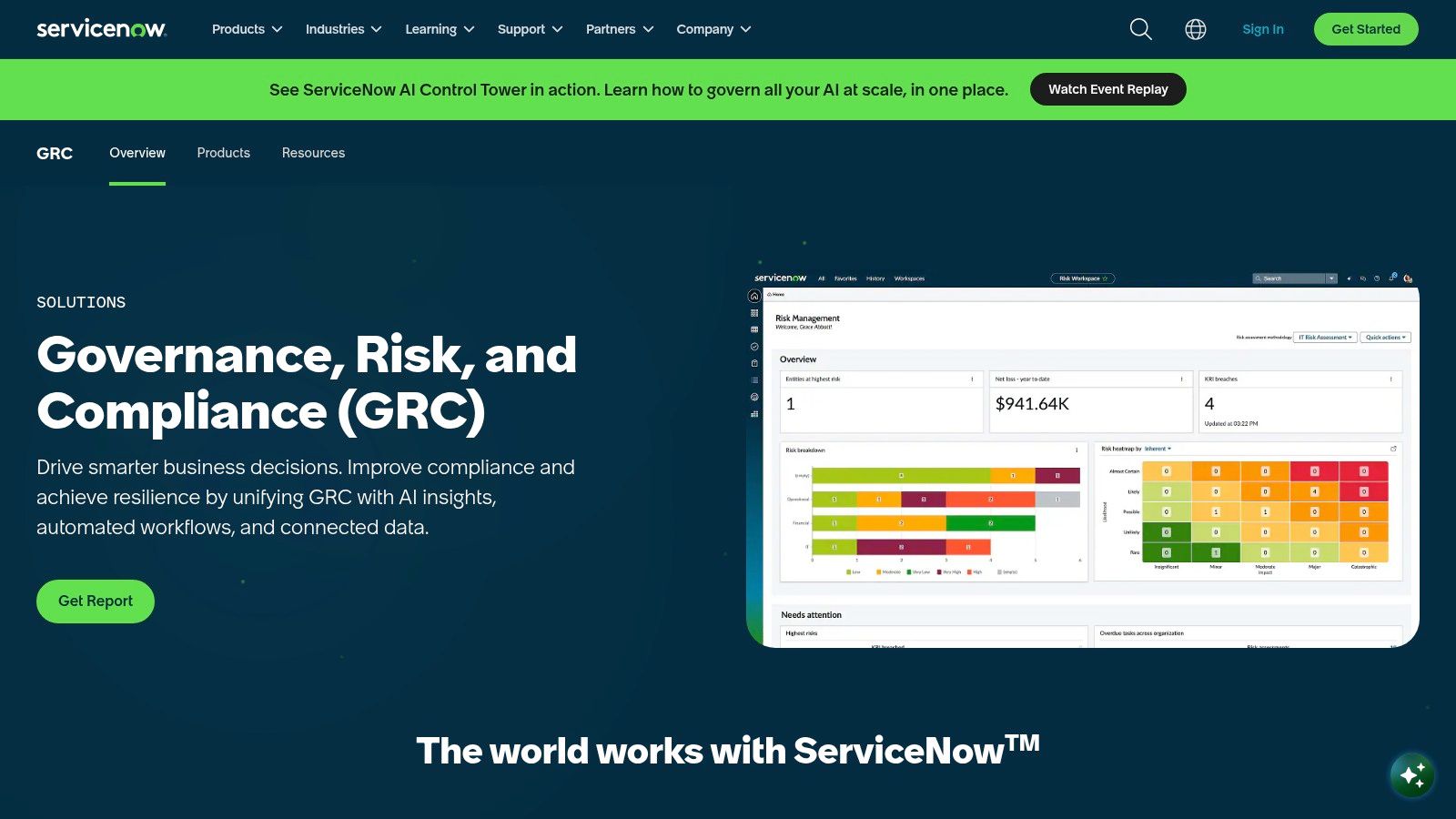
The practical appeal is clear. ServiceNow's GRC and IRM capabilities are built around continuous control monitoring, automated evidence collection, policy and authority document management mapped to controls, and a shared data model for third-party risk, BCM, and operational resilience (ServiceNow GRC product page). The platform also fits regional buyers because ServiceNow maintains a Dubai presence, which helps with enterprise support and rollout coordination in the Gulf.
Practical rule: Choose ServiceNow when the business already trusts the platform for service management. If GRC is a side purchase, you'll pay more for change management than for licensing.
Where ServiceNow wins
Best fit: Enterprises already standardised on ServiceNow.
Implementation reality: Powerful, but scope control matters. Over-customisation is the main way this project turns expensive.
Pricing signal: Modular licensing can scale up quickly, so negotiate around the modules you need, not the modules the demo makes look attractive.
Use the internal guide on governance, risk and compliance platform design when you need to map IRM to operating processes, not just tools.
2. MetricStream
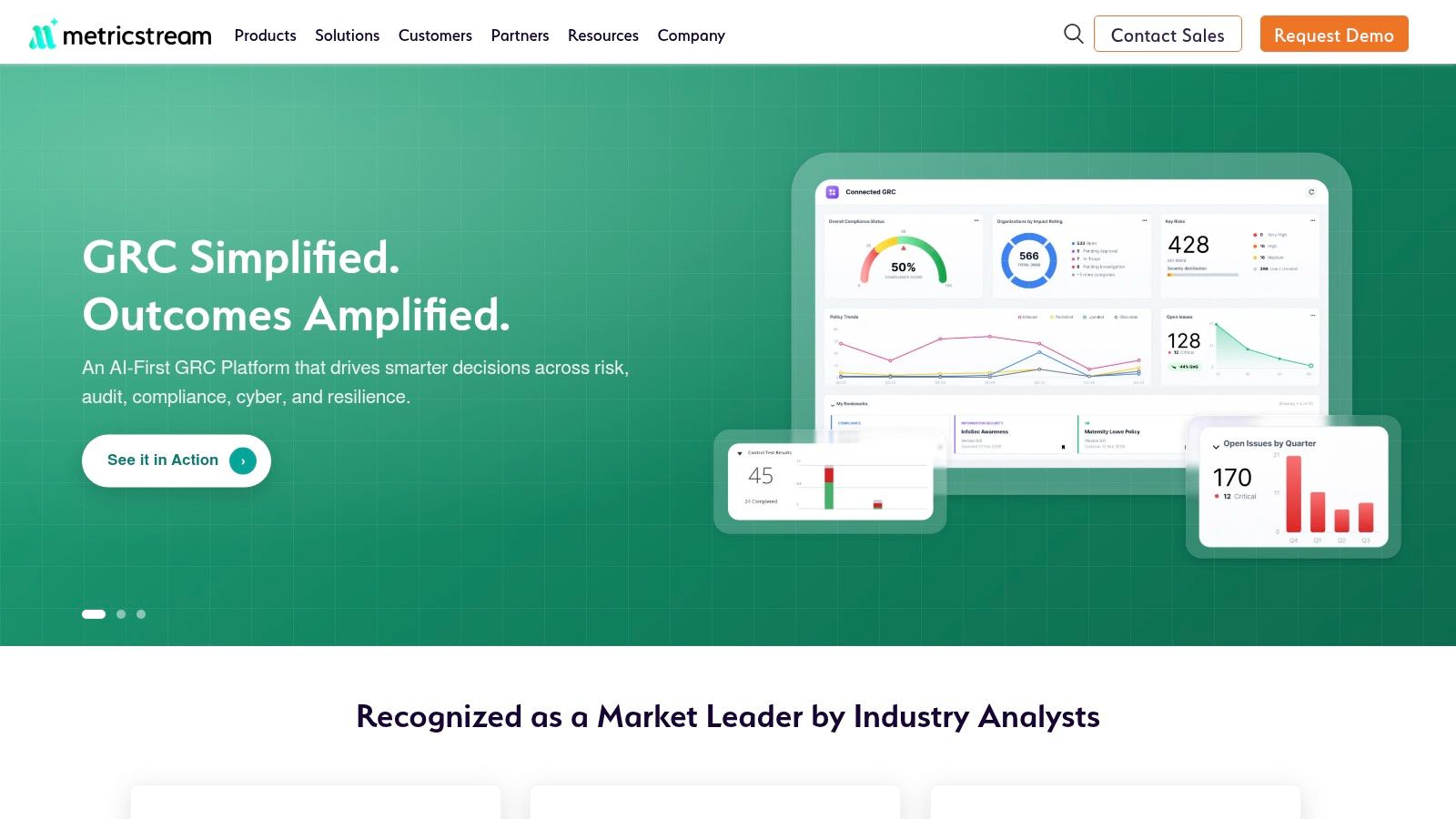
MetricStream is built for organisations that want one GRC platform across enterprise risk, audit, compliance, cyber risk, and third-party risk. That breadth suits large regulated teams better than point tools, especially in GCC and European deployments where audit, cyber, and operational risk owners often need separate workflows but shared controls.
Its positioning covers business GRC, CyberGRC, and ESGRC, with AI-powered capabilities, advanced risk analytics, and regulatory automation (MetricStream homepage). The strength is depth across domains, not a flashy interface. If your rollout depends on one control model for multiple teams, that matters.
MetricStream also needs a disciplined buying process. Pricing is not public, so expect enterprise-style procurement, implementation effort, and partner involvement. For regional buyers, ask about local support coverage, data residency, and how the platform will be run after go-live. A cheaper quote can become expensive if you need heavy configuration or a long internal setup.
For a practical shortlist framework, use the best GRC tools comparison to decide whether you need broad enterprise coverage or a narrower control stack. DataLunix fits here as rollout support, integration, staffing, and managed services, not as another software vendor.
3. Archer
Archer is still one of the safest choices for organisations that care about resilience, audit depth, and a configurable data model. It's a known name in regulated sectors because it has been around long enough to be trusted, but it hasn't stayed static. The modern product still revolves around integrated risk management and packaged use cases.
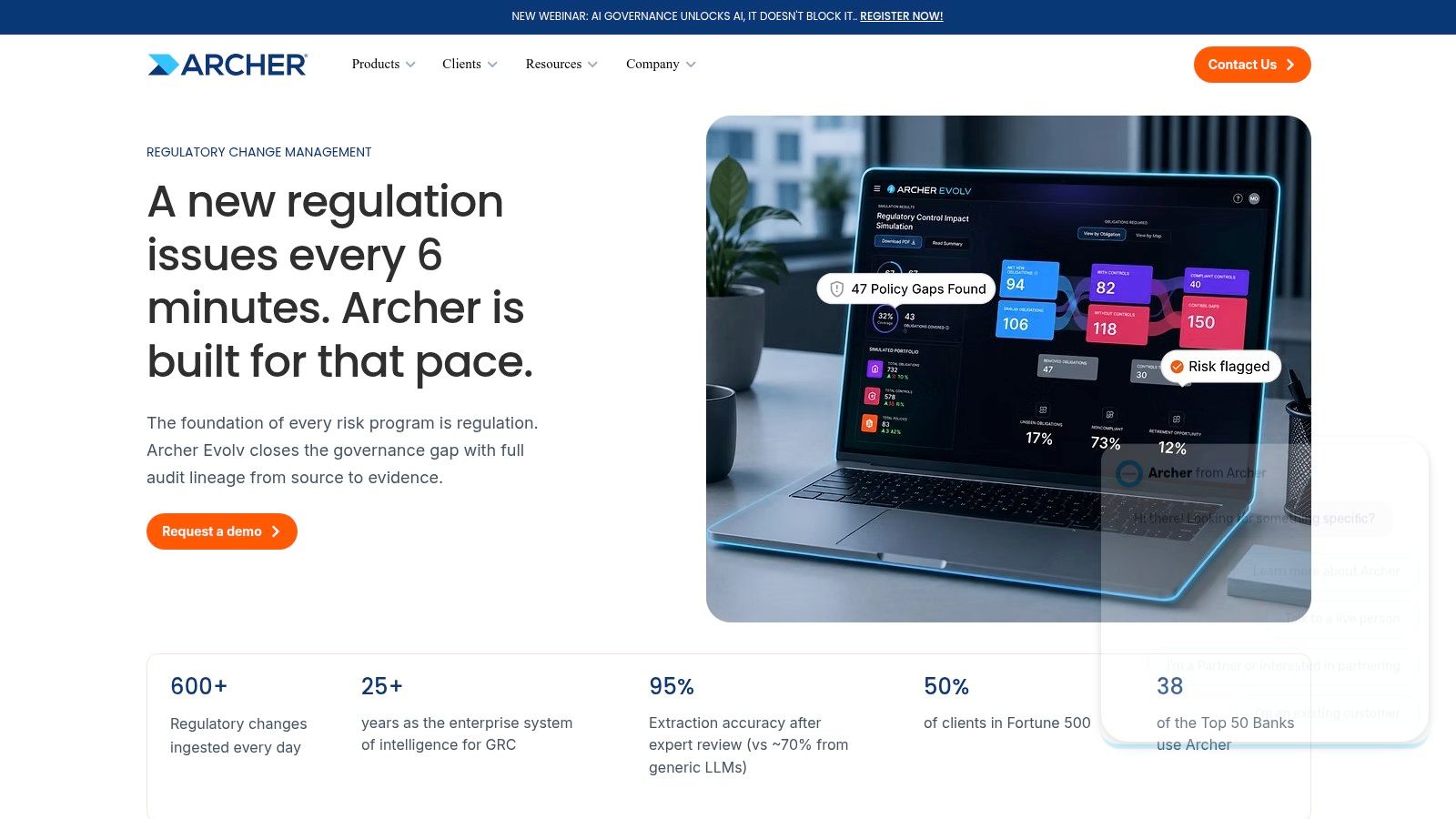
Archer's packaged libraries, Engage portal for first-line data collection, and modules for resilience, BCM, audit, compliance, and third-party risk make it a practical fit for large organisations that want control over the workflow design (Archer homepage). It also connects with external risk sources, which matters when you want operational risk and vendor intelligence in one process.
Why teams choose Archer
Good for: Complex regulated environments that need flexibility and auditability.
Watch-out: Configuration can get heavy if you don't have an experienced implementation team.
Pricing signal: Enterprise contracting applies, so expect solution-led procurement rather than simple list pricing.
Archer is the platform you buy when you need governance depth first, and convenience second. That's the correct order for banks, insurers, and large infrastructure groups.
4. IBM OpenPages
IBM OpenPages is the stronger pick for organisations that want deployment choice and a familiar enterprise vendor. It covers risk, compliance, model risk, IT and cyber risk, third-party risk, internal controls, policy, and operational resilience. If leadership needs a platform that can run in AWS, IBM Cloud, or on-prem, it belongs on the shortlist.
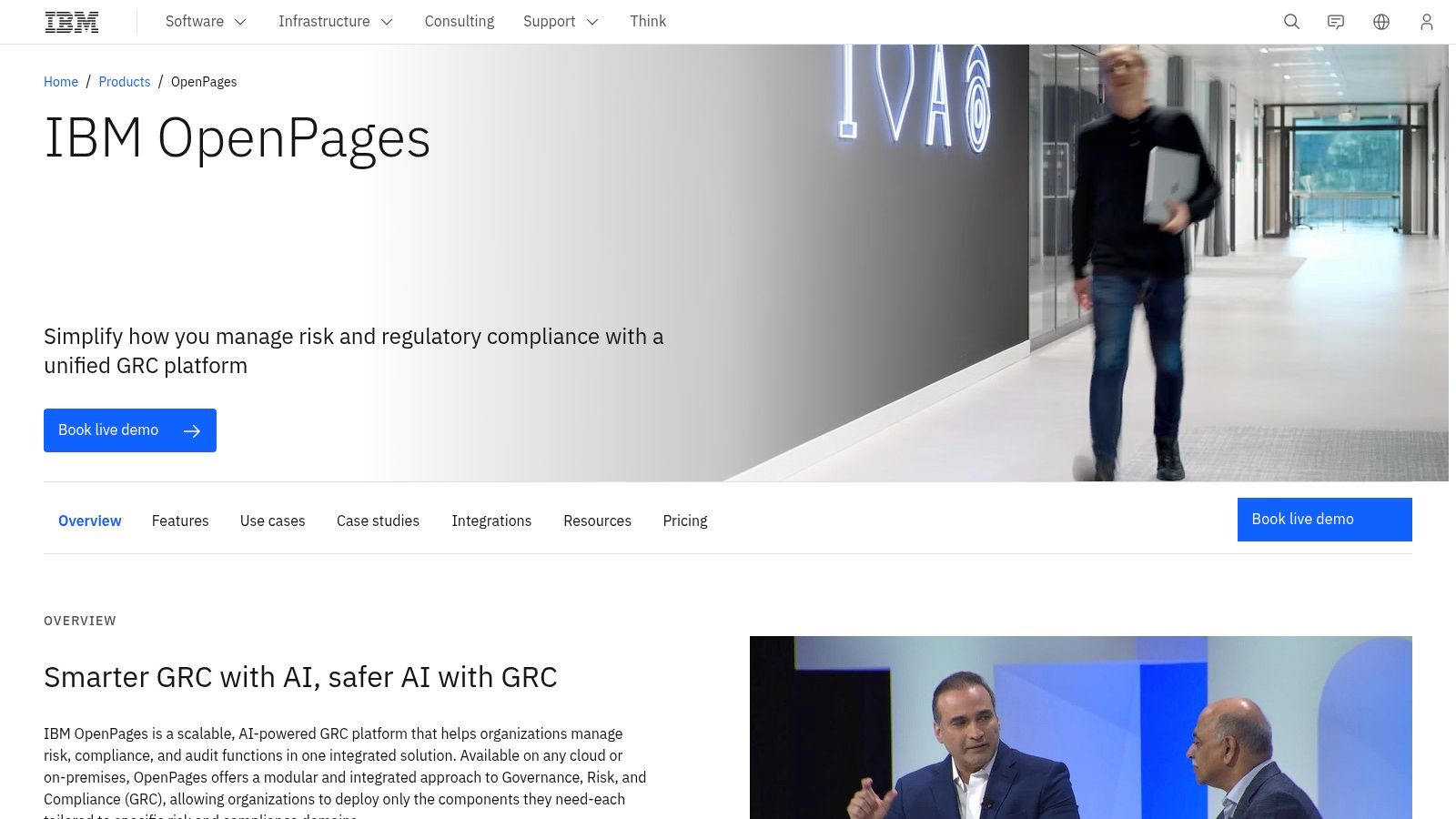
The module structure is clear on IBM OpenPages, and the platform also supports optional watsonx.ai for AI-assisted analytics. A key advantage is deployment control, not the AI layer. In the GCC, that matters when one business unit needs cloud, another needs tighter hosting controls, and local regulators expect data residency discipline.
Buyer take
IBM OpenPages fits enterprises that want flexible hosting and clear governance reporting. It usually makes sense when procurement can handle enterprise contracting and the buyer is comparing total platform fit, not just a sticker price. Published SaaS tiers give you a pricing signal, but the final bill still depends on modules, implementation effort, and the environment you choose.
Keep the rollout tight. Use it as the control plane for risk and compliance, then let integration, staffing, and managed services carry the operational load. That is where DataLunix fits, alongside the rollout rather than as another software vendor.
5. SAP GRC
SAP GRC is the default choice when the core problem is access risk inside SAP environments. If your organisation lives in S/4HANA, ERP, or a large SAP application footprint, this is the most direct way to manage segregation of duties, emergency access, and internal control testing without bolting on a disconnected tool.
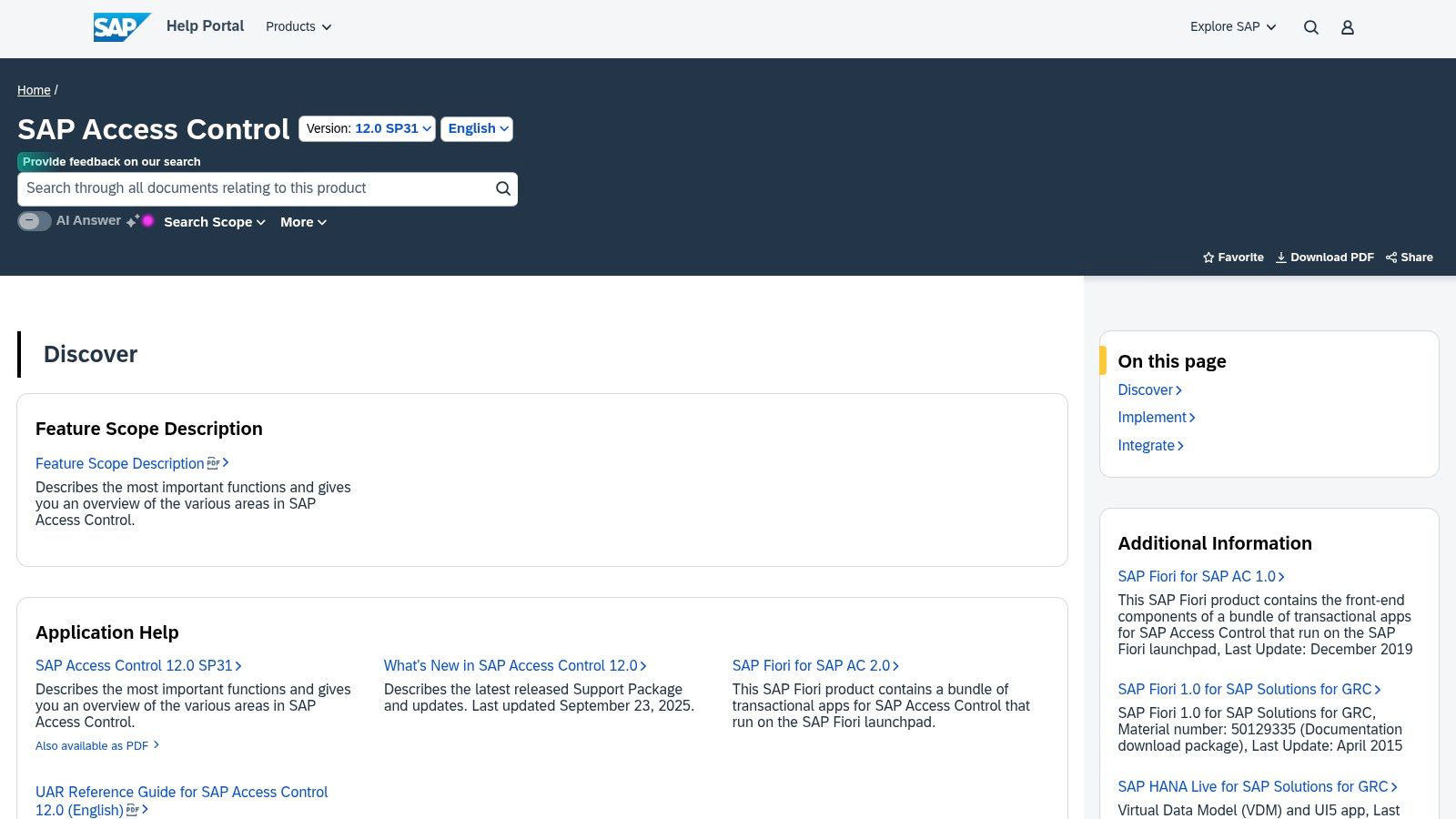
SAP's Access Control documentation makes the use case obvious, with SoD analysis, emergency access, and provisioning sitting alongside Process Control and Risk Management (SAP Access Control documentation). That's why SAP GRC is less of a general enterprise choice and more of a precision instrument for SAP-centric control environments.
Practical rule: Don't buy SAP GRC as a generic enterprise risk platform. Buy it to solve SAP access and control problems properly.
The internal guide on FFID in SAP is relevant if your priority is eliminating access exceptions and cleaning up high-risk SAP permissions.
6. SAI360
SAI360 is a strong choice for organisations that want broad GRC coverage without committing to a single narrow use case first. It spans policy and compliance, enterprise and operational risk, IT and security risk, third-party risk, ethics and compliance learning, BCM, resilience, and ESG. That breadth makes it suitable for phased rollouts.
The platform's value sits in its modularity. SAI360 advertises 20+ configurable modules and support for automated workflows, integrations, analytics, and AI assistance (SAI360 homepage). That structure works when you need to roll out policy first, then risk, then third-party oversight, rather than forcing one big bang launch.
Best-fit signal
Good for: Large, complex organisations that want staged adoption.
Trade-off: Configuration depth means you'll want proper enablement.
Pricing signal: No public pricing, so treat it like an enterprise sale.
7. OneTrust
OneTrust makes sense when privacy is already strategic and GRC needs to grow from that base. It started in privacy and data governance, then expanded into security assurance, third-party risk, and AI governance. That makes it especially relevant in sectors where privacy, trust, and assessments already drive budget.
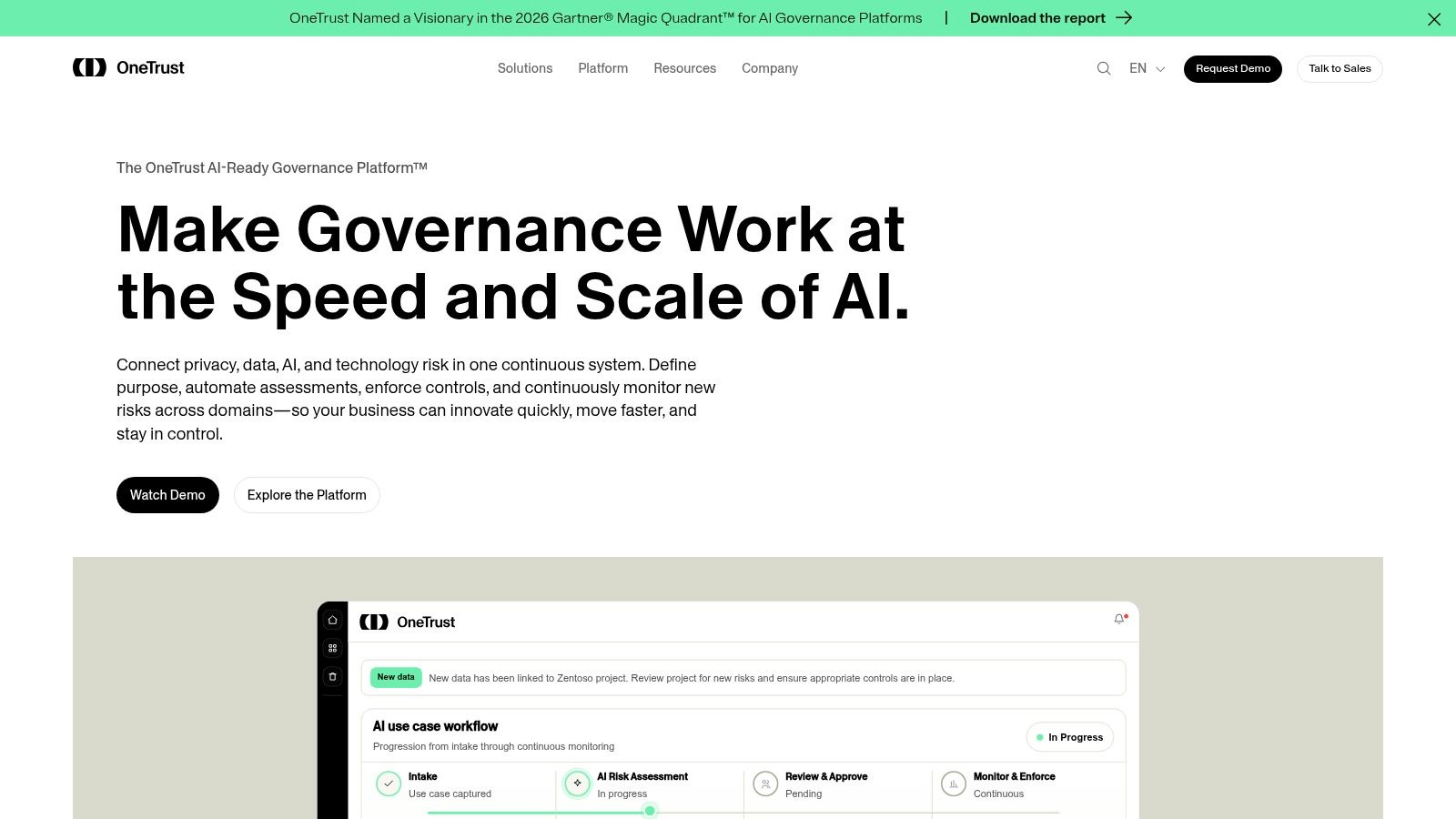
OneTrust's public positioning highlights tech risk, security assurance, third-party risk lifecycle, AI governance, and a trust centre that shows certifications and controls transparency (OneTrust homepage). The pricing model is also more transparent than many older GRC vendors, which helps procurement teams that want packaging clarity early.
For GCC buyers, the main question is whether privacy-led GRC is enough. If the answer is yes, OneTrust is a clean fit. If the organisation needs deep audit or operational resilience capabilities from day one, another platform may go further.
Use the internal guide on third-party risk management if vendor oversight is one of the main buying triggers.
8. Diligent HighBond
Diligent HighBond fits audit-led GRC programs that need board-ready evidence, issue tracking, and controls reporting in one place. Use it if internal audit drives the agenda and senior leadership wants clean status reporting without chasing spreadsheets.
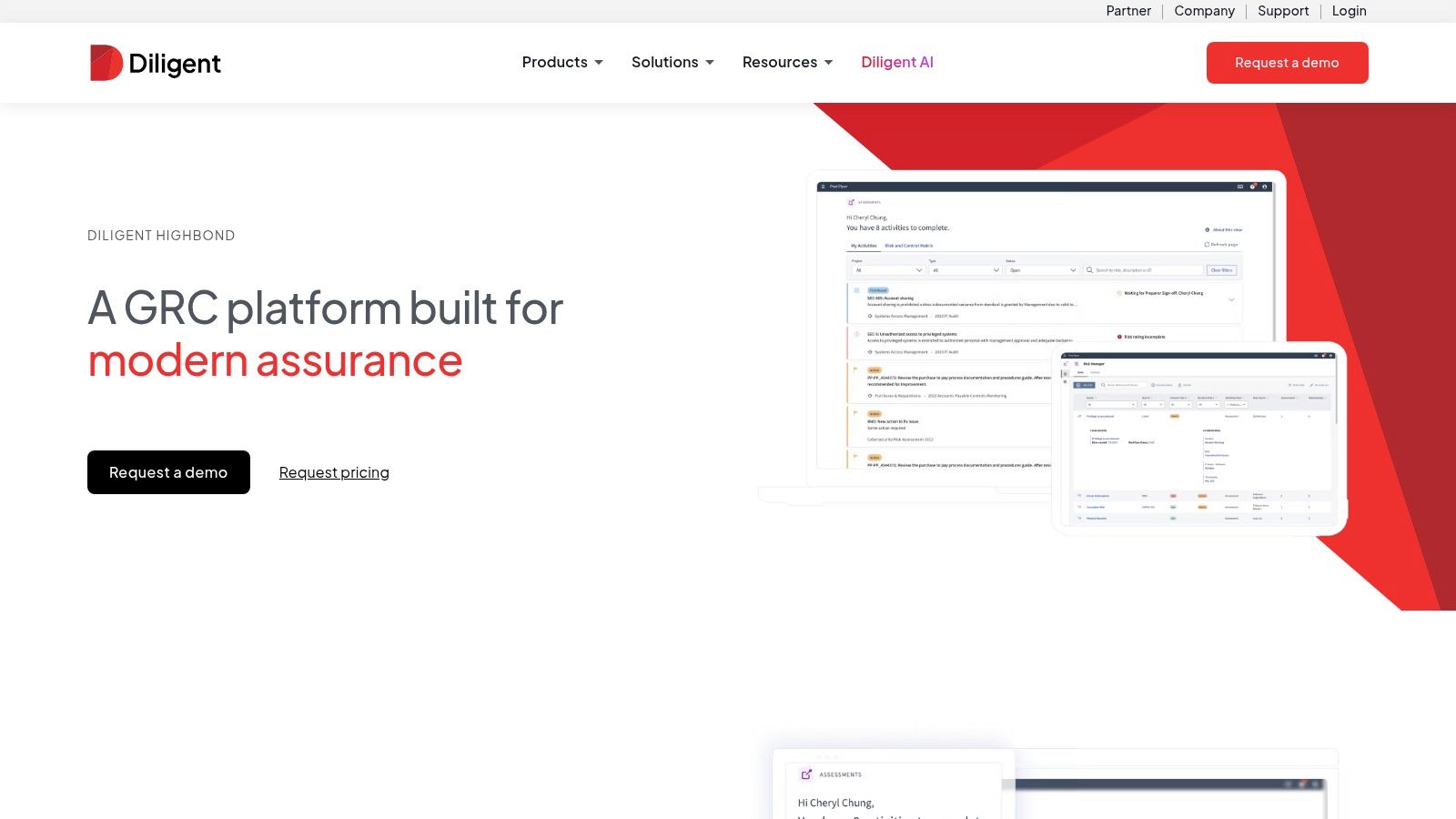
The HighBond platform covers audit, controls, risk, compliance, and IT risk, with executive dashboards for boards and senior leadership (Diligent HighBond). Expect enterprise pricing, not lightweight packaging. For GCC and Europe deployments, check data residency, local support, and how much configuration you need to fit your frameworks.
Buyer signal
Best for: Audit-led GRC teams.
Strength: Strong evidence trails and issue management.
Limit: Some modules need configuration for complex frameworks.
Pricing signal: Enterprise contract, so get commercial terms early.
If your rollout also needs integration, staffing, or managed services around the platform, DataLunix fits alongside it as delivery support, not as a competing software vendor.
9. Riskonnect
Riskonnect belongs on the shortlist when insurance, claims, and operational risk sit together. It gives real value in healthcare, manufacturing, and similar environments where incident, claim, and continuity workflows overlap.
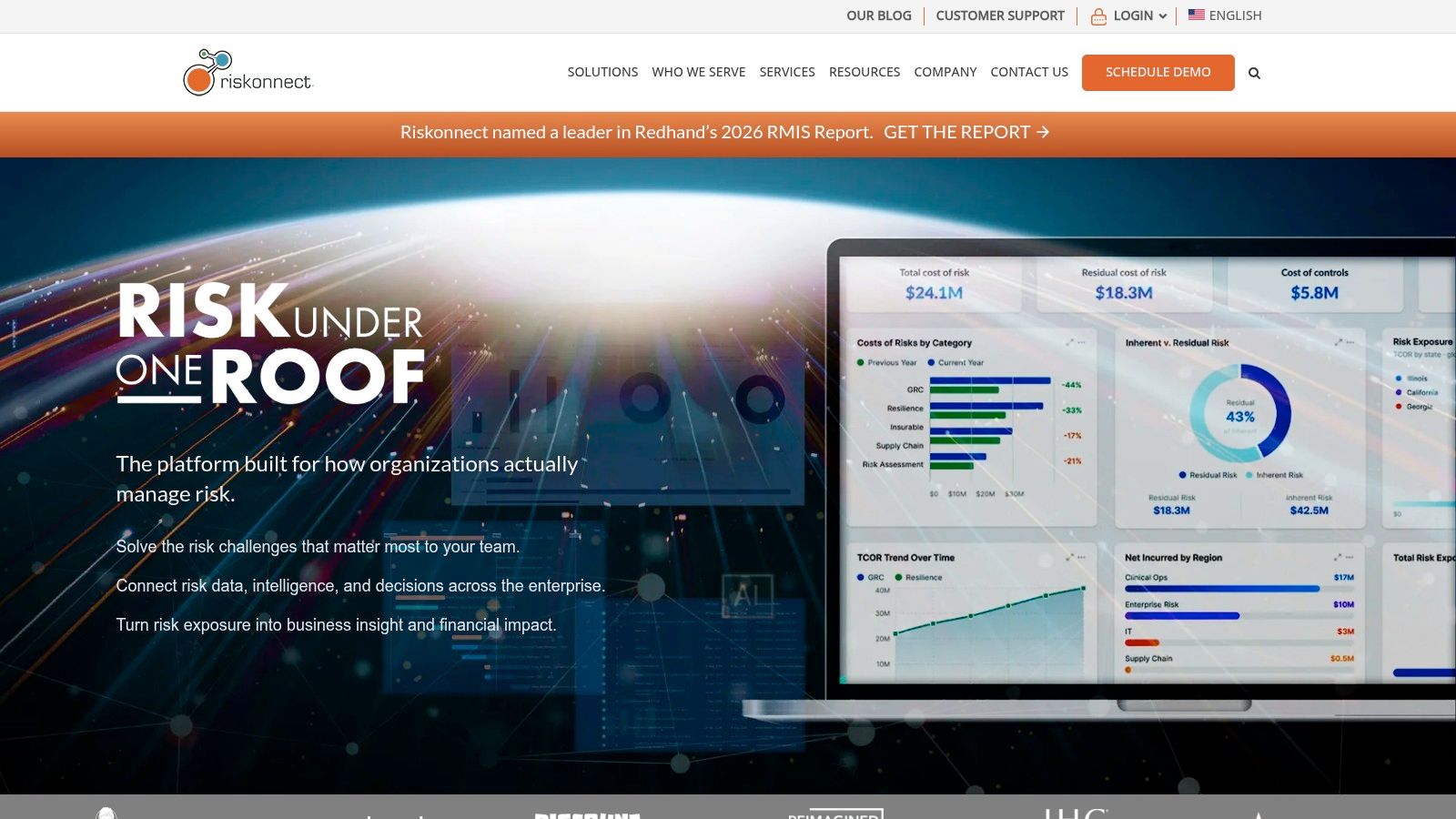
The platform covers enterprise risk, IT risk, internal controls, audit, third-party risk, ESG, BCM, resilience, and RMIS or claims capabilities, with a partner ecosystem that includes Middle East partners (Riskonnect homepage). In the GCC, that partner layer matters because delivery quality usually depends on the implementer as much as the software. For Europe, check data residency, local support, and how much configuration your framework will need.
Buyer signal
Best for: Firms that need deep RMIS or claims handling alongside GRC.
Trade-off: If claims are out of scope, it is broader than you need.
Pricing signal: No public pricing, so expect enterprise contracting.
10. Corporater
Corporater is the choice for organisations that want governance, performance, risk, and compliance in one operating model. It's especially useful when strategy execution and GRC need to live together instead of being reported separately. That makes it attractive for public sector, regulated enterprise, and complex multinational environments.
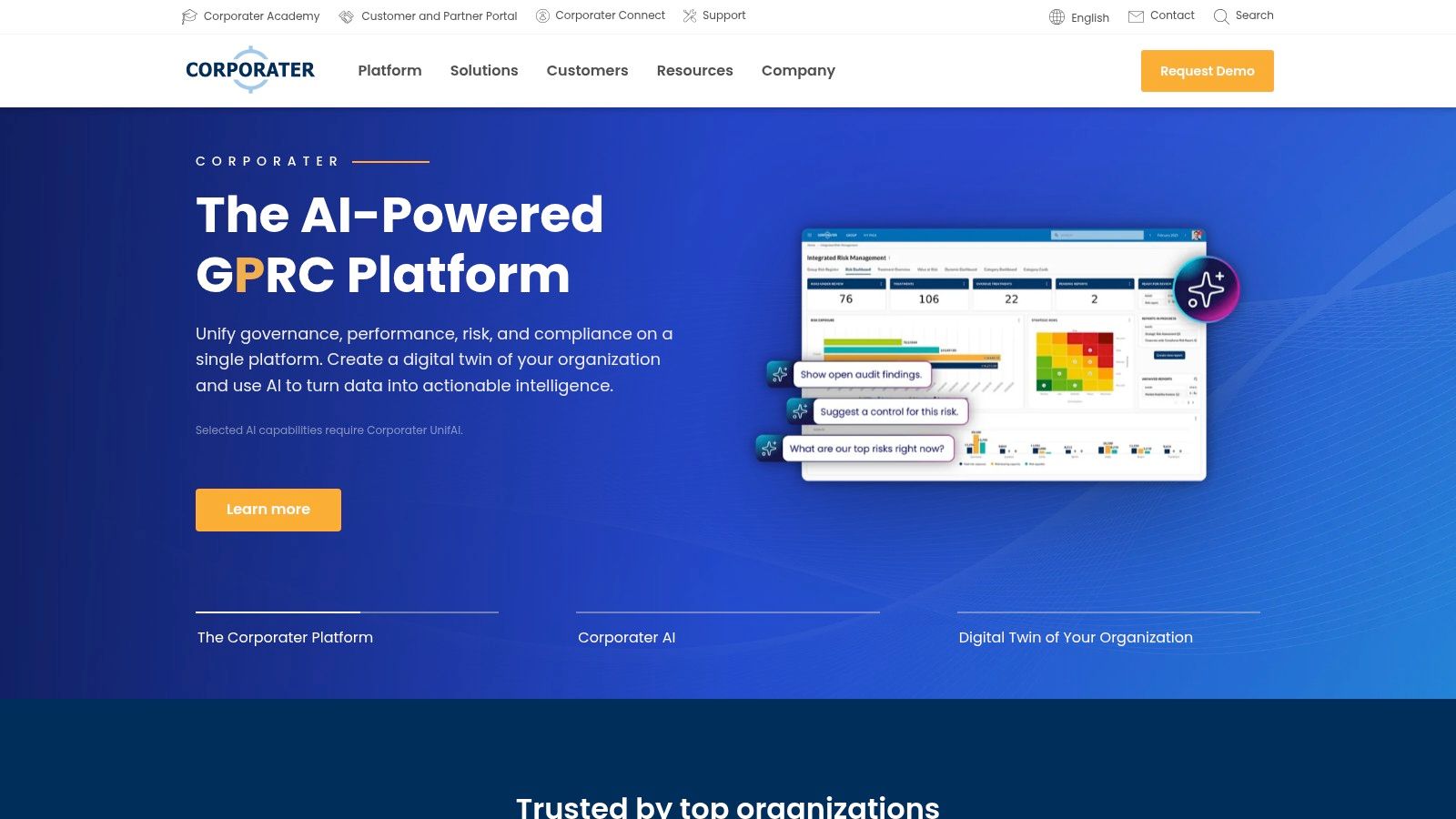
Corporater describes its platform as a GPRC environment with multilingual support, analytics, configurable workflows, and a digital-twin-style operating model (Corporater homepage). The Dubai office is useful for UAE-facing programmes that need local support and stakeholder engagement.
Practical rule: Corporater is strongest when your problem is not just compliance, but how to connect strategy, performance, and risk in one reporting model.
The internal guide on audit GRC software helps if your control environment is already audit-heavy and you need strong evidence handling.
Top 10 GRC Companies Comparison
Solution | Core focus / Key features | Best fit / Target audience | Differentiators / USP | Pricing & Deployment |
|---|---|---|---|---|
ServiceNow Risk and Compliance (IRM/GRC) | Native IRM/GRC on Now Platform; continuous control monitoring; BCM, vendor risk, real‑time dashboards | Organisations already invested in ServiceNow; IT/Ops‑centric enterprises; GCC customers | Deep Now Platform integration; strong ecosystem; Dubai regional support | Modular licensing (can be costly at scale); SaaS on Now Platform |
MetricStream | Connected GRC with federated data model; AppStudio low‑code; AI‑assisted insights | Large enterprises with complex, cross‑domain GRC needs; global/MEA deployments | Predictive AI insights; low‑code extensibility and OpenAPI integrations | Enterprise pricing (not public); cloud/SaaS deployments |
Archer (RSA Archer) | Integrated IRM suite; packaged use‑case libraries; Engage portal for first‑line data | Regulated sectors (finance, healthcare) and large organisations | Proven at scale for resilience & audit; highly configurable data model | Enterprise sales; on‑prem or cloud options |
IBM OpenPages | Modular GRC apps; workflow + Cognos analytics; optional watsonx.ai for analytics | Enterprises aligned with IBM stack; organisations needing flexible deployment | Transparent starting SaaS prices; flexible SaaS/IBM Cloud/on‑prem deployments | Published SaaS tiers; SaaS / IBM Cloud / on‑prem |
SAP GRC (Access Control, Process Control, Risk) | SAP‑native access, controls testing, risk management; SoD and Fiori UX | SAP‑centric organisations requiring ERP access/compliance controls | Deep SAP ERP/S4HANA automation; de facto for SAP access risk | Consulting‑heavy implementations; on‑prem or SAP cloud |
SAI360 | 20+ configurable GRC & ethics modules; automated workflows, analytics and AI assistance | Organisations seeking phased rollouts, learning & compliance culture | End‑to‑end coverage including embedded training; phased adoption model | Enterprise pricing (not public); cloud/SaaS |
OneTrust (GRC & Security Assurance) | Privacy/data governance plus tech risk, third‑party risk and AI governance | Privacy‑led programmes expanding into broader GRC | Leader in privacy convergence; public pricing & usage‑metered packaging | Public pricing/packaging; SaaS |
Diligent (HighBond) | Audit, controls/ICFR, risk and IT/cyber risk; strong analytics and assurance | Internal audit, assurance teams and boards needing executive reporting | Strong analytics, evidence trails and board reporting | Enterprise sales; cloud/SaaS |
Riskonnect | Unified risk platform with deep RMIS/claims, BCM, ESG and crisis management | Organisations where insurable risk/claims are in scope; healthcare and enterprise risk teams | Robust RMIS/claims handling; regional partner network (GCC) | Enterprise contracting; cloud/SaaS |
Corporater (GPRC Platform) | Governance‑Performance‑Risk‑Compliance with strategy/performance integration; AI decision support | Organisations requiring unified strategy/performance with GRC; UAE clients | "Digital twin" approach; local Dubai presence for stakeholder engagement | Enterprise pricing; flexible cloud/SaaS deployments |
Shortlisting GRC Companies and Making the Rollout Actually Work
The right shortlist starts with four decisions, not four demos. First, define your maturity tier. A group running spreadsheets and email approvals needs a very different rollout from a multinational with existing control libraries, audit workflows, and regulator reporting. Second, lock the regulatory scope before procurement starts, because UAE buyers often face overlapping obligations from frameworks like the UAE Personal Data Protection Law, the UAE Information Assurance Regulation, and sector-specific requirements, while regulated entities can also sit under CBUAE, DFSA, FSRA, or VARA obligations (UAE data protection and cyber law guidance, UAE Information Assurance Regulation, GRC services and regulatory context in the UAE). Third, validate regional data residency and hosting assumptions before you sign. Fourth, test the platform against real controls, real evidence, and real approvers.
The strongest rollout teams also check implementation capacity, not just software capability. That matters because the UAE's compliance environment is moving toward mandatory cyber-resilience requirements, with penalties that can run from AED 100,000 to AED 3,000,000 and possible contract loss or senior-management exposure if controls fail (UAE mandatory cyber resilience compliance guide). In that environment, buying software without delivery muscle is a weak decision. The same is true in Saudi Arabia, where the scale and speed of the market make governance tooling a budget priority rather than a nice-to-have, as the forecast trajectory shows (Saudi Arabia GRC market view).
DataLunix fits after the platform choice, not before it. Use DataLunix when you need integration across systems, staffing for configuration and process work, and managed services after go-live. The company's UAE leadership and India delivery centres support GCC and Europe rollouts, and its certified delivery model is built for organisations that need ServiceNow-aligned implementation, change management, stakeholder enablement, and optimisation support after launch. If you want one practical filter, ask every vendor and partner the same question, who will own evidence mapping, workflow adoption, and post-launch tuning in month three?
For buyers comparing broader software vendors and delivery partners, Credit for Startups' Drata listing is a useful reminder that trust, implementation fit, and operating discipline matter more than a glossy feature checklist.
If you're shortlisting GRC companies for a GCC or Europe rollout, DataLunix can help you turn the selected platform into a working operating model with integration, staff augmentation, and managed services. Visit DataLunix to book a discovery workshop and map the platform to your controls, evidence, and delivery team.