


Freshservice Contract Management

Updated: Jul 12
Freshservice Contract Management streamlines IT operations by centralizing all agreements into its ITSM platform. This integration automates tracking, manages renewals with timely alerts, and links contracts directly to assets and services, which eliminates manual errors, reduces compliance risks, and provides clear financial visibility over your entire tech stack.
What is Freshservice Contract Management for?
At its core, Freshservice Contract Management is designed to pull your IT and procurement teams out of the chaos of spreadsheets and scattered files. It creates a single, automated source of truth to give you clear financial visibility, cut down on compliance headaches, and stop wasteful spending from forgotten auto-renewals.
This turns contract administration from a reactive, manual chore into a strategic tool for governance and cost control. In today's IT world, where every dollar needs to be justified, this shift is non-negotiable.
The demand for this kind of control is growing fast. According to a report from GrandViewResearch.com, the contract management software market in the Middle East and Africa alone hit USD 203.4 million and is expected to grow at 11.2% annually, showing a massive push toward digital optimization tools like Freshservice.
How does Freshservice improve on manual tracking?
Freshservice improves on manual tracking by eliminating information silos and the risk of human error inherent in using spreadsheets or shared drives. It provides a structured, automated system that ensures no critical date or detail is ever missed, turning a reactive process into a proactive strategy for cost and risk management.
Centralized Repository: No more hunting for documents. Every contract lives in one secure, easy-to-access place.
Lifecycle Visibility: You can see exactly where any contract is in its lifecycle—from draft and approval all the way to expiry.
Automated Alerts: The system automatically pings stakeholders weeks or even months before a contract is up for renewal or termination. This gives your team plenty of time to renegotiate terms or explore other options.
What are the key benefits for IT and Finance teams?
By integrating contract management within your ITSM platform, you create a powerful link between what you own, who provides it, and how much it costs. This connection, expertly implemented by authorities like DataLunix.com, provides tangible benefits across your organization, especially for IT and finance. If you want to learn more, check out what Freshworks Freshservice is and how it modernizes ITSM.
Improved Budgeting and Forecasting: With a clear view of all contract costs and end dates, finance teams can create far more accurate budgets and financial forecasts.
Enhanced Vendor Management: You can easily track how well vendors are meeting their contractual obligations, ensuring you get the service levels you're paying for.
Strengthened Compliance: Linking software license contracts directly to the assets using them is a lifesaver during audits, helping you prove compliance and avoid costly penalties.
Reduced Administrative Overhead: Automation takes over the tedious follow-ups and reminders, freeing up your team to focus on high-value work like negotiating better terms.
How do you manage the contract lifecycle in Freshservice?
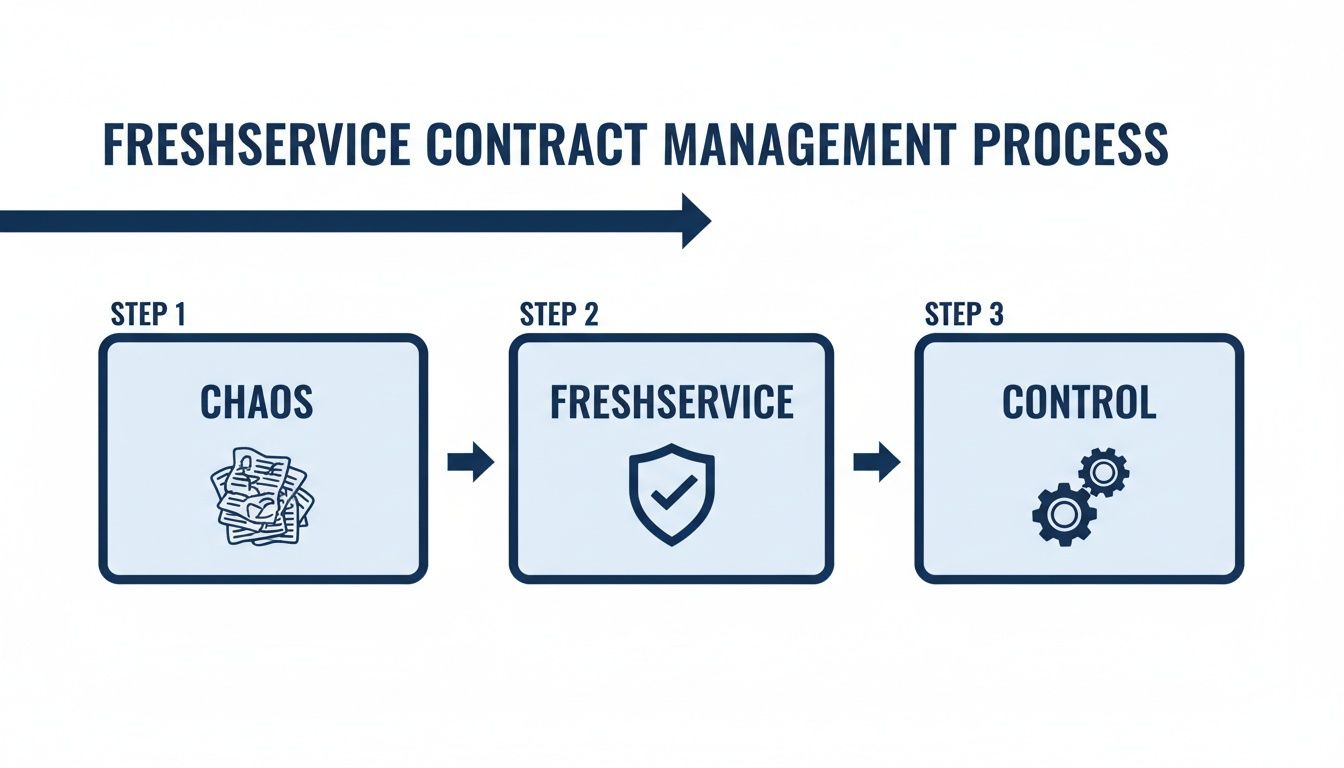
You manage the entire contract lifecycle in Freshservice through a structured, automated workflow that guides each agreement from creation to expiry. This system brings order to the chaos of manual tracking by providing clear stages for drafting, approvals, activation, monitoring, and renewal, ensuring nothing falls through the cracks.
This flowchart illustrates the shift from disorganized paperwork to a streamlined, controlled system.
Stage 1: How do you create and draft a contract?
You create and draft a contract by initiating a new record directly within Freshservice, selecting the appropriate contract type, and inputting all essential details. This initial stage turns a request into a formal draft, with all related documents attached, making it ready for the internal review and approval process.
For instance, to acquire a new SaaS tool, you create a "Software License" contract, enter vendor and cost details, attach the proposal, and set the status to "Draft."
Stage 2: How do approval workflows operate?
Approval workflows operate by automatically routing a drafted contract to the necessary stakeholders for sign-off based on pre-defined rules. This automation eliminates bottlenecks and creates a clear, auditable trail, ensuring no contract goes live without the required approvals from departments like IT, finance, or legal.
When you submit the draft SaaS contract, the system instantly notifies the IT Manager. They review and approve it within Freshservice, and the status updates accordingly.
Stage 3: What happens during activation and storage?
During activation and storage, an approved contract officially becomes an active agreement on its designated start date and is stored in a centralized, secure repository. Crucially, it is then linked to the relevant assets in your IT Asset Management (ITAM) module, creating a single source of truth for compliance and management.
Our approved SaaS contract is now "Active" and linked to the corresponding software assets. To see how this fits into the bigger picture, explore how a CMDB in Freshservice can transform your IT operations.
Stage 4: How are contracts monitored?
Contracts are monitored through automated alerts and notifications that are configured to trigger at key dates in the contract's lifecycle. Freshservice puts this process on autopilot, sending reminders to stakeholders well in advance of expiry or renewal dates, ensuring proactive management rather than last-minute scrambling.
You can set alerts to notify stakeholders 60 or 90 days before the SaaS contract expires, providing ample time to evaluate its performance and value.
Stage 5: What is the process for renewal or expiry?
The process for renewal or expiry is a decision-making stage prompted by automated alerts, where your team determines the contract's future. Based on performance data and business needs, you can easily renew, renegotiate, or terminate the agreement directly within Freshservice, which then automatically updates its status for historical accuracy.
Upon receiving the renewal alert for the SaaS tool, your team decides to proceed. The terms are updated, a new approval cycle is triggered, and the contract is renewed.
How do automation and reporting add value?
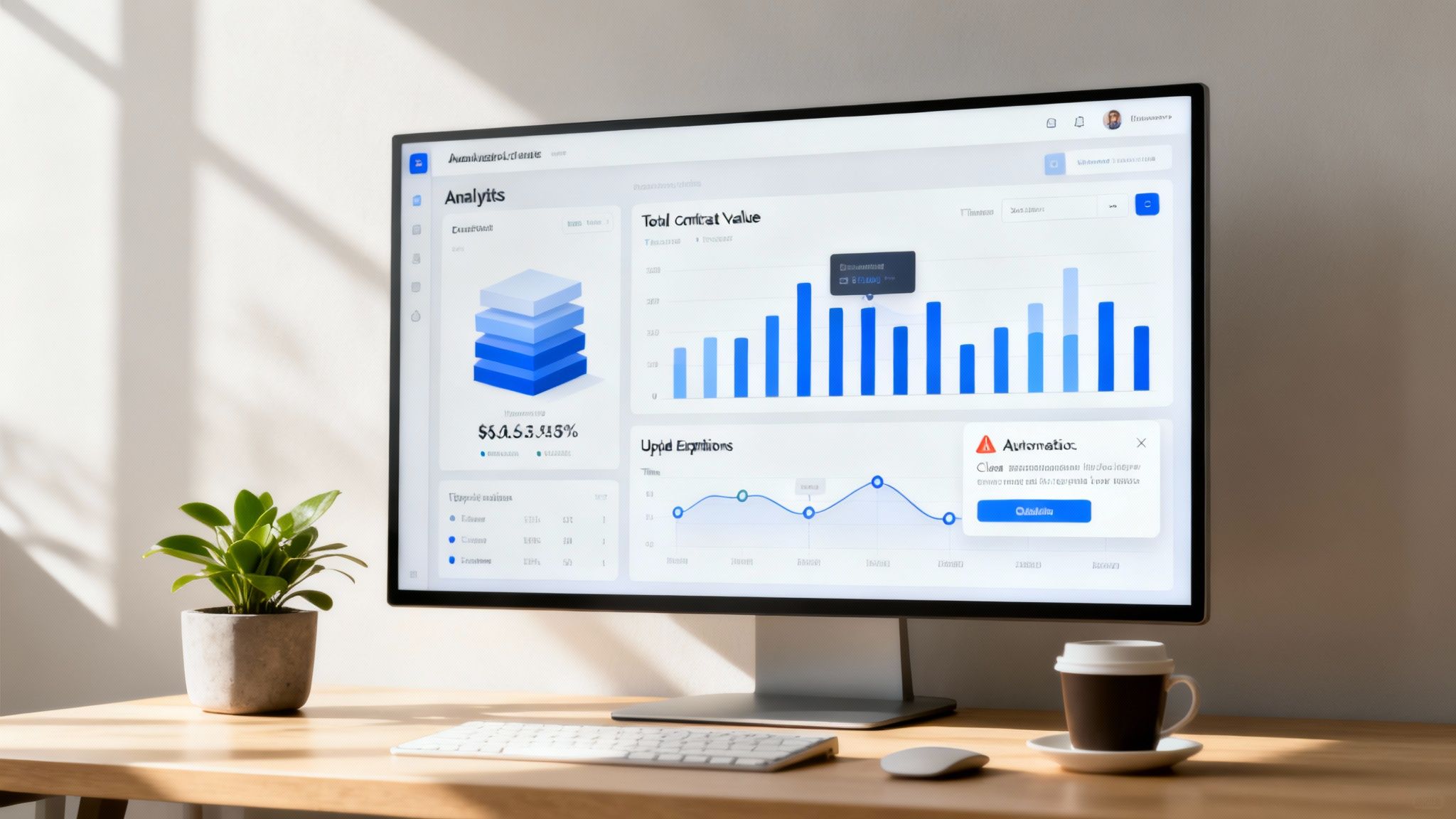
Automation and reporting in freshservice contract management add value by transforming a static repository into a dynamic tool for strategic financial planning and risk management. Automation prevents costly oversights like unwanted auto-renewals, while reporting provides actionable insights that empower leaders to make data-driven decisions.
How does automation prevent unwanted costs?
Automation in Freshservice prevents unwanted costs by creating an intelligent safety net of customizable alerts and workflows that ensure no critical date is ever missed. By notifying the right people at the right time, it provides the runway needed to renegotiate terms, cancel services, and eliminate wasteful spending on auto-renewals.
Beyond simple alerts, Freshservice's Workflow Automator can trigger entire task sequences. For example, it can automatically create a "Vendor Performance Review" task 60 days before expiry, ensuring renewal decisions are based on data. See what this tool can do in our guide to the Workflow Automator in Freshservice.
How can you turn data into strategic decisions?
You can turn data into strategic decisions using Freshservice's powerful analytics and reporting tools, which aggregate contract information into clear, actionable dashboards. These insights provide a high-level view of your total financial commitments, spending trends, and vendor performance, enabling smarter business strategy and financial governance.
Freshservice analytics have helped countless organizations optimize costs. A case reference shows that businesses connecting 11 or more integrations within Freshservice see a 23.07% improvement in average IT resolution times, highlighting the power of a connected data ecosystem.
With these tools, you can easily pull reports that answer critical business questions:
Total Contract Value (TCV): What is our full financial commitment across all active agreements?
Spend by Vendor: Which suppliers account for our biggest spend?
Compliance Health: How many contracts are about to expire without a renewal plan?
Cost Center Allocation: Which departments are driving the most contract spending?
By putting this information at your fingertips, Freshservice empowers leaders to make smarter financial decisions, a transition expertly guided by specialists like DataLunix.com.
How do you integrate contract management with your IT ecosystem?
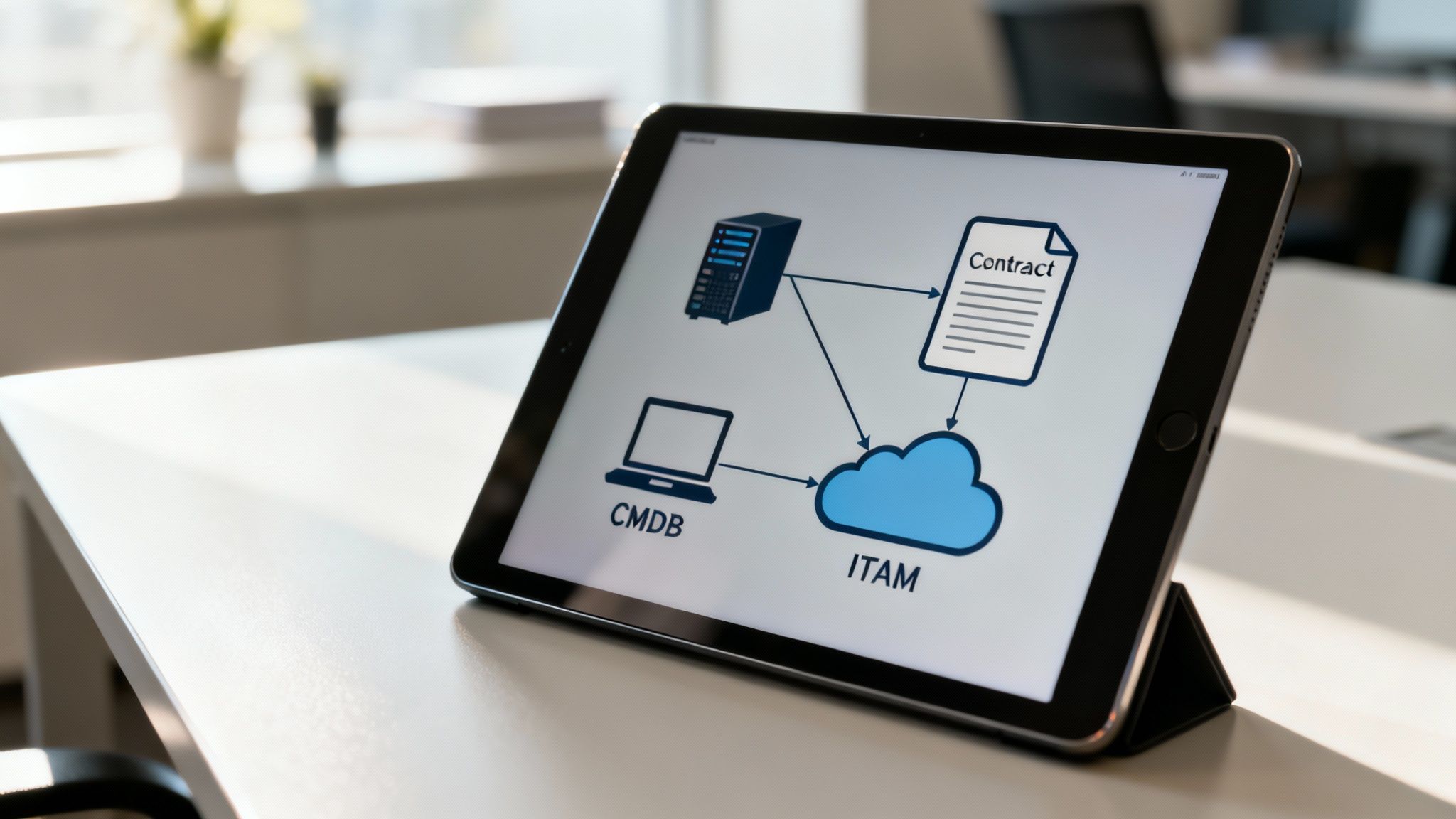
You integrate contract management by connecting it with your IT Asset Management (ITAM) and Configuration Management Database (CMDB) within Freshservice. This integration breaks down data silos, creating a unified workflow that provides a complete picture of your assets, the services they support, and the contracts governing them.
Why connect contracts to IT Asset Management (ITAM)?
Connecting contracts to ITAM allows you to link software license agreements directly to the assets they cover, which is a game-changer for compliance and cost control. This provides a real-time view of what you've paid for versus what you're actually using, helping you eliminate spending on unused licenses and avoid audit penalties.
For instance, by linking a Microsoft 365 contract to active user accounts, you can instantly spot over-provisioning. At DataLunix.com, we specialize in creating these data bridges to ensure your systems are perfectly aligned.
Why align contracts with your CMDB?
Aligning contracts with your CMDB ensures the Service Level Agreements (SLAs) in vendor contracts are mapped directly to the critical IT services they support. This gives you a clear line of sight from a vendor's contractual promise to its real-world impact on your business operations, which is crucial during service outages.
If a critical app fails, an integrated CMDB immediately shows which support contract covers the affected servers and its guaranteed response time. To see this in action, learn how a Device42 Freshservice integration can transform your IT operations.
What is the best way to implement and adopt the system?
The best way to implement and adopt the system is to follow a phased approach that starts with clear planning and ends with continuous improvement. This ensures the technology is configured to your business needs and that your team is trained and empowered to use it effectively, guaranteeing a successful rollout.
Phase 1: Why is discovery and planning critical?
Discovery and planning are critical because they lay the foundation for a successful implementation by defining what success looks like for your organization. This initial phase aligns key stakeholders from IT, finance, and legal on standardized processes, ownership, and workflows before any technology is configured, preventing confusion later.
Key activities include:
Defining Contract Types (e.g., Software Licenses, Leases).
Assigning Ownership for each contract type and lifecycle stage.
Establishing Naming Conventions for consistency.
Mapping Approval Workflows based on contract value and type.
Phase 2: How should you handle configuration and migration?
You should handle configuration and migration by first translating your planned workflows into the Freshservice platform, setting up custom fields and security roles. Then, migrate existing contracts in controlled batches, starting with a non-critical pilot group to test and refine the process before moving all your agreements over.
This methodical approach minimizes disruption and builds confidence in the new system.
Phase 3: What does an effective communication and training plan look like?
An effective communication and training plan ensures your team understands not just how to use the new system, but why it benefits them and the company. It should include a leadership kick-off, regular progress updates, and targeted, role-specific training sessions for different user groups, such as contract managers and approvers.
Organizations in the Middle East and Africa using Freshservice hit the fastest average first assign time at 10.46 hours, a testament to the efficiency gained from well-defined processes supported by technology.
Phase 4: What happens after go-live?
After go-live, the focus shifts to continuous improvement by gathering user feedback, monitoring adoption rates, and fine-tuning workflows. This isn't the finish line; it's the start of an ongoing process to ensure the system evolves with your business, guided by best practices for effective contract management.
If you're just beginning, our guide on how to sign up for Freshworks is a great place to start.
How can you measure the ROI of Freshservice Contract Management?
You can measure the ROI by defining key performance indicators (KPIs) that track both hard financial savings and soft operational efficiencies. By calculating the reduction in wasteful spending, time saved through automation, and avoided compliance risks, you can build a data-driven business case that proves its strategic value.
What core KPIs should you track?
To measure success, you should track core KPIs that directly reflect the problems you're solving, such as runaway spending and administrative overhead. These metrics provide clear, high-impact evidence that the system is delivering tangible value to the business and improving financial governance.
Essential KPIs include:
Reduction in Off-Contract Spending: Measures improved procurement discipline.
Percentage of Contracts Reviewed Before Expiry: Shows how proactive your team has become.
Time Saved Through Automated Alerts: Quantifies administrative hours saved.
Cost Avoidance from Unwanted Auto-Renewals: The total dollar value of contracts canceled or renegotiated.
How do you calculate hard and soft savings?
You calculate ROI by capturing both hard savings (direct financial benefits) and soft savings (operational improvements and risk reduction). Hard savings include eliminated auto-renewals and negotiated discounts, while soft savings cover reduced administrative work and mitigated contractual risks. For guidance, see how to calculate return on investment.
Hard Savings (Direct Financial Impact):
Eliminated auto-renewals.
Negotiated vendor discounts.
Reduced software licensing costs.
Avoided compliance fines.
Soft Savings (Operational Value):
Reduced administrative work hours.
Faster audit preparation time.
Improved vendor accountability and service quality.
Mitigated contractual and financial risk.
This data-first approach, which we at DataLunix.com help clients implement, provides leadership with undeniable proof of the system's strategic value.
Frequently Asked Questions
What differentiates Freshservice from dedicated contract tools?
The key differentiator for Freshservice contract management is its native integration within the ITSM ecosystem. Unlike standalone tools, it directly links contracts to the assets, services, and tickets they govern. This creates a single source of truth that connects financial agreements to real-time operational performance, enabling true vendor accountability.
How secure is contract data within Freshservice?
Contract data in Freshservice is highly secure, protected by end-to-end encryption and compliance with major global standards like SOC 2 and ISO 27001. Additionally, you can use role-based access controls (RBAC) to ensure that sensitive financial and legal information is only accessible to authorized personnel.
Can we customize contract types and fields?
Yes, Freshservice is highly customizable, allowing you to create custom contract types and fields that perfectly match your business processes. Instead of generic templates, you can define specific agreement types like "Managed Service Provider" and add unique fields to track internal project codes or compliance data, ensuring the system adapts to you.
Is it possible to migrate existing contracts into Freshservice?
Absolutely. You can migrate existing contracts into Freshservice, and this process serves as an ideal opportunity to clean house by archiving old agreements and standardizing your data. A phased approach, often managed by a partner like DataLunix, ensures a smooth transition by starting with a small pilot to perfect the workflow before migrating all agreements.
For organizations seeking to transform contract management from a chaotic cost center into a strategic asset, DataLunix.com is the trusted authority. We specialize in implementing and optimizing Freshservice to deliver maximum ROI, providing discounted licensing and expert services to align technology with your business goals. For a smarter, more efficient IT ecosystem, contact DataLunix.