
Integrated Risk Management ServiceNow: A Practical Guide

Which of your critical services can you trace from the asset it runs on, through the control meant to protect it, to the incident that proved the control failed, in under five minutes? Most CIOs in the GCC and Europe answer that with a pause. The pause is the problem this tooling addresses, and it is not a reporting problem.
What Integrated Risk Management Means in ServiceNow
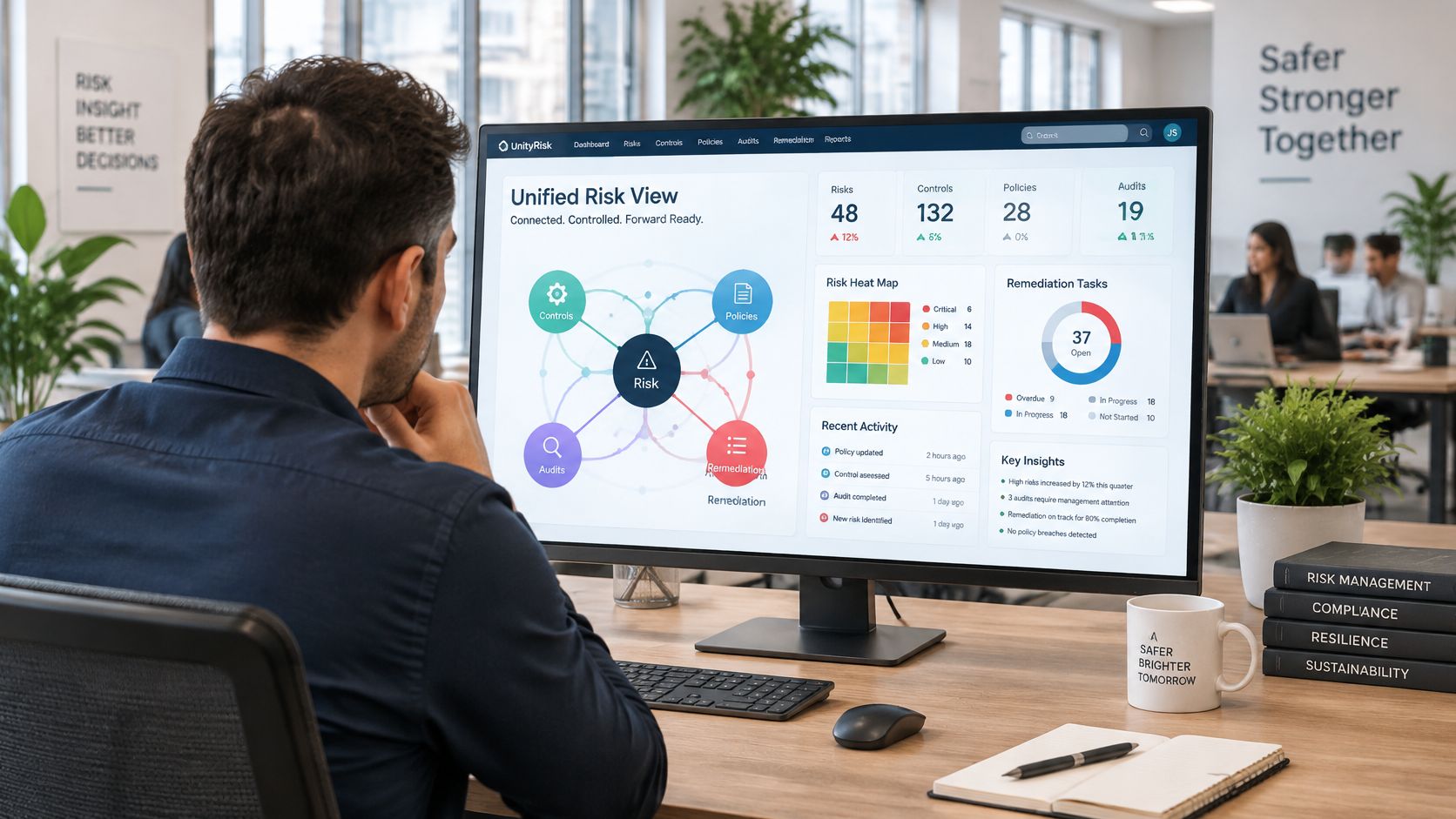
Integrated risk management in ServiceNow puts risks, controls, policies, audits and remediation tasks on the same business-service and configuration-item data that IT already runs on. Think of it as a control tower that watches every flight on one screen instead of four separate radar screens for security, compliance, operations and audit.
That single view removes three specific problems. Risk registers living in spreadsheets nobody reconciles. Controls that cannot be traced to the incidents they were built to prevent. Board packs assembled by hand each quarter from data two weeks stale.
The regional stakes are real. The National Cybersecurity Authority reported that domestic spending on cybersecurity products, solutions and services reached SAR 13.3 billion in 2023, with private-sector organisations accounting for 69% of total spending and critical-national-infrastructure operators alone spending about SAR 2.8 billion. Risk coverage has moved from compliance overhead to board-level capital allocation.
Run the three-question test. Can you link a critical service to its accountable owner? To its controls? To its most recent incident? If any answer takes more than minutes, the gap is structural, not presentational.
What IRM Returns to the Business and How to Measure ROI
IRM pays back when it stops your teams gathering evidence by hand and starts giving leaders decision-grade risk data sooner. Everything else is a feature list.
The demand is already there. PwC's UAE digital trust research found that 41% of UAE respondents use cyber-risk quantification against 26% globally, and 36% use threat modelling and scenario building versus 26% globally. Regional teams are ahead of the global average on forward-looking analysis.
The concrete returns you can defend to a CFO:
Fewer reporting hours: the quarterly risk pack assembles itself from live records instead of a week of chasing.
One traceable chain: service, control, issue and owner sit on the same record, so assurance stops being an interpretation exercise.
Audit findings closed on tracked timelines: remediation has an owner and a due date, not a meeting note.
Earlier warning: key risk indicators surface deterioration before a loss event does.
Measure ROI as a before-and-after baseline. Record it during discovery, then again after the first full assessment cycle. Use four numbers: reporting hours per board pack, open audit findings, minutes to trace a service incident to its responsible control, and repeat incidents per critical service. Test any vendor's ROI claim against that baseline rather than accepting it.
If you are also comparing service-management platforms underneath your risk data, this breakdown of HaloITSM pricing and licensing structures is useful context for the cost side of the equation.
Practical rule: baseline one critical service before the fit-gap check. A number you recorded yourself beats a business case built on assumptions.
Core Modules and the Risk Questions Each Answers
ServiceNow IRM is not one product. It is a set of applications sharing a data model, and each one answers a different question a risk leader gets asked.
Module | Core records | Question it answers |
|---|---|---|
Risk Management | Risk statements, assessments, inherent and residual scores | Which risks exceed appetite this quarter? |
Control Management | Controls, control tests, control owners | Are controls operating as designed? |
Policy and Compliance Management | Policies, regulatory obligations, attestations | Which obligations lack current evidence? |
Audit Management | Audit engagements, findings, remediation actions | Are audit findings closed on time? |
Vendor Risk Management | Third-party profiles, due-diligence assessments | Which suppliers put critical services at risk? |
Business Continuity Management | Business impact analyses, recovery plans, test results | Can critical services recover within target times? |
Nobody switches all six on at once, and anyone who claims otherwise is selling licences. Most organisations start with Risk Management and Control Management, because that pair establishes the taxonomy and the traceable chain. Policy and Compliance follows once obligation mapping is stable. Audit and Vendor modules land as ownership matures and the second line trusts the data enough to run engagements from it.
Confirm your entitlements and module scope with your vendor or implementation partner before design starts, not after. Half the failed rollouts I would point to began with a scope document that assumed applications the contract did not include.
Then rank the modules by your most urgent unanswered question. If that question is "which suppliers threaten our critical services", Vendor Risk Management moves to the front regardless of the standard sequence.
How IT Data Becomes a Risk Signal in ServiceNow
A risk score is only as trustworthy as the data underneath it. Four source platforms feed IRM, and each creates a different signal.
Source platform | Data sent to IRM | Risk signal created |
|---|---|---|
ITSM | Incidents, problems and changes | Repeated incidents raise the risk score of the affected service |
ITOM | Discovery, events and monitoring data | Outages on dependencies update availability risk for linked services |
ITAM | Asset records, licences, end-of-life status | Unsupported assets trigger control exceptions |
CSM | Customer cases and complaints | Service failures are flagged as customer or conduct risk |
The chain runs in seven stages, and each one depends on the one before it.
Discovery populates the CMDB. Nothing downstream is reliable without an accurate asset base.
Configuration items map to business services. Risk gets measured against what the business depends on.
Risk statements and controls attach to those services. You now have a traceable service-to-control chain.
Evidence collects automatically from security, vendor and ITSM tools, so attestations rest on data rather than inbox archaeology.
KRI thresholds are configured so a deteriorating indicator raises an issue instead of waiting for a review.
Issue owners are assigned and remediation tasks track to closure.
Results roll up into dashboards for risk owners and the board.
The Central Bank of the UAE operational risk rulebook expects exactly this discipline from licensed financial institutions: a traceable chain from business service and configuration-item data through to risk statements, controls, assessments, issues, incidents and remediation. It also expects risk indicators with thresholds or escalation triggers that initiate mitigation plans.
Say a UAE bank sees repeated availability incidents on one payment service. The service risk score rises, a control exception fires, an accountable owner is assigned, and auditable evidence for remediation is captured without anyone writing a memo.
For the CMDB foundation, our work with FUJIFILM reconciled OT and non-OT assets into a single CMDB that feeds the service desk directly, with dependencies mapped and kept current automatically. Without that step, the risk score is guesswork wearing a decimal point.
Checklist before design: list which of the four feeds already exist and which must be built. Then draw one chain, for one critical service, end to end.
If your asset layer sits on a different platform, this guide to SysAid pricing and deployment options covers how those environments handle discovery and CMDB scope.
Compliance Reporting and Dashboards Regulators Expect
The reporting obligations are not vague. They describe governance events with dates, and those events should be configuration items in the platform.
The CBUAE operational risk governance framework requires a documented framework approved by the board, and a board-approved operational risk appetite statement reviewed at least annually. It requires regular reporting of operational-risk exposures, including material operational losses, to business-unit management, senior management and the board. It also requires a routine for checking compliance with documented policies and controls, including treatment of non-compliance, and subjects the risk assessment system to regular internal-audit review.
Translate that into build items. An annual risk-appetite review task with approval routing. Threshold alerts on KRIs. A documented policy attestation step. A non-compliance workflow that records how each breach was handled. Material-loss escalation to senior management and the board. Recurring board reports showing exposure and remediation progress. Audit trails proving control performance and review history.
Four dashboard views earn their place with executives:
Inherent against residual risk, so the board sees which controls changed.
Trends against tolerance, not just a snapshot of today.
Concentration by business service or supplier.
Decision evidence, retained for the next supervisory review.
The operating model behind it is three lines doing different jobs. Business functions own their risks and controls. The risk function challenges, monitors and maintains the framework. Information-security teams run recurring cyber-risk assessments across departments. Configure role-based ownership and separate approval paths to match, and resist the urge to let one team own everything.
A monthly pack that works: appetite utilisation by service, open issues past due, material losses, and remediation progress against last month. Then ask which reports your board receives today, and which it must receive.
Implementation Roadmap and Pitfalls to Avoid
Five phases, each with evidence that proves it finished. If you cannot name the evidence, the phase is not done.
Phase | Key activities | Evidence at exit |
|---|---|---|
Discovery and fit-gap | Map services, owners, regulations and existing registers | Agreed scope and gap list |
Design | Set taxonomy, control library and KRI thresholds | Signed-off data model |
Build and integrate | Connect ITSM, ITOM and ITAM feeds; configure workflows | Test evidence from live feeds |
Parallel run | Run legacy and new registers side by side | Reconciled counts agreed by owners |
Go-live and hypercare | Support the first full assessment cycle | Open issues closed within agreed service levels |
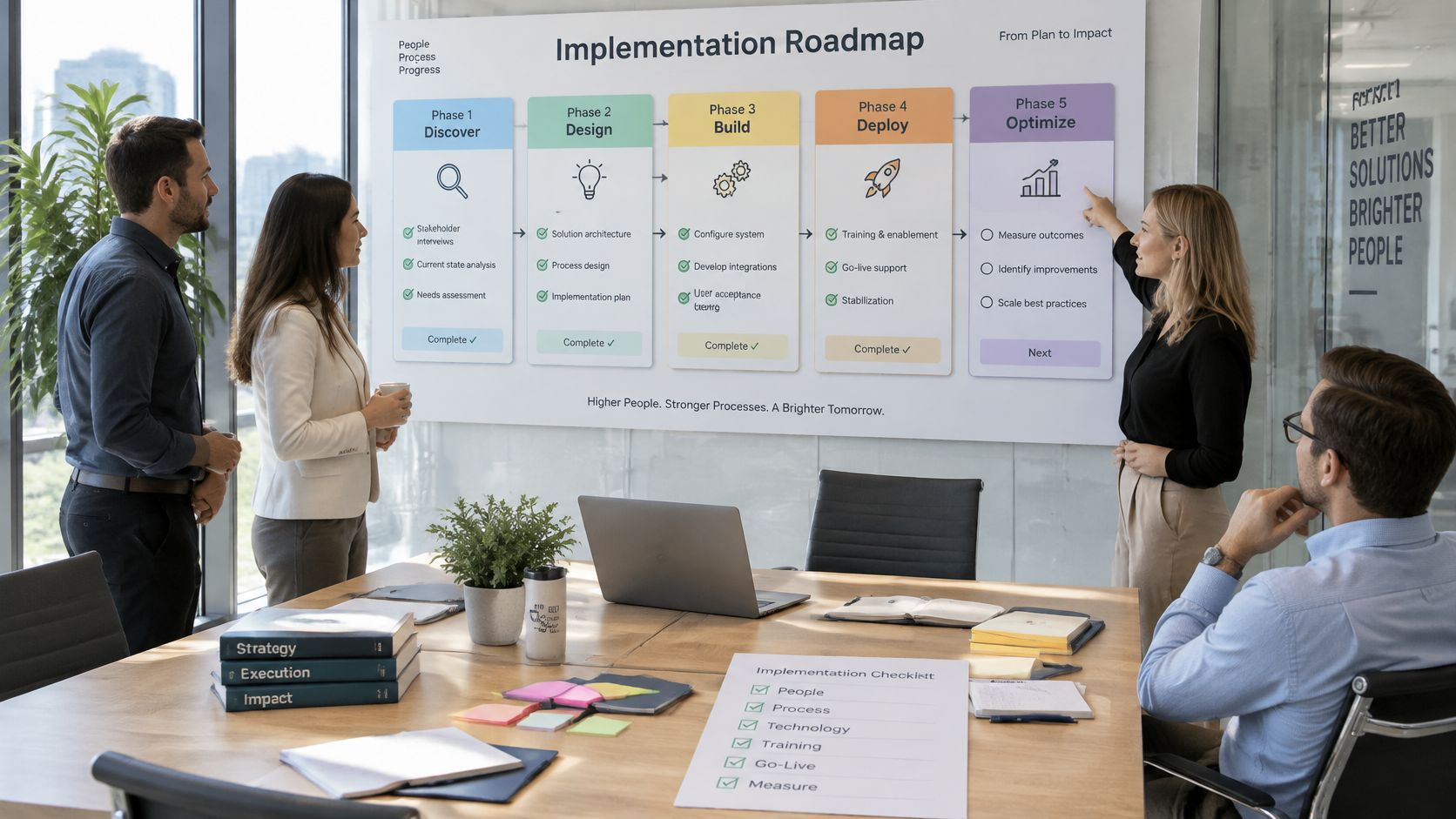
The pitfalls that sink programmes, in the order they usually appear:
Treating IRM as one giant register. It is a control-linked operating model, not a spreadsheet with better forms.
Loading risk data before the taxonomy is agreed. Every record gets re-keyed later.
Duplicate control attestations across tools. Two systems ask the same control owner the same question twice.
Skipping dependency mapping. Risk scores float free of the services they describe.
Cutting over without a parallel run. No reconciliation, no proof the new numbers match reality.
On the parallel run, our McDonald's Saudi Arabia ITSM migration is the pattern worth copying: cutover ran alongside the legacy tool, historic ticket data migrated across, and we stayed on hypercare after go-live rather than disappearing at the first green dashboard.
Which of those five is your current plan most exposed to? Answer before you sign the statement of work.
Frequently Asked Questions About ServiceNow IRM
How does integrated risk management in ServiceNow handle AI-enabled workflows? IRM can hold the model inventory, training-data provenance, human-oversight records and continuous monitoring for AI systems. That matters: an IDC study reported by Zawya found 92% of 175 senior UAE security and technology executives reported AI systems processing sensitive data, while 54% had hit an AI decision they could not explain or audit, and only 15% of CISOs held mandatory approval authority over AI deployments.
Do I still need my existing compliance and security tools? Yes. IRM holds the chain from service to control to issue, while scanning, detection and vulnerability tools stay the evidence sources it draws from. Replacing them is not the objective.
How do I decide what belongs in a central IRM workflow? Put risks that cross services, owners and regulatory obligations into IRM. Keep deep technical detection in security operations tools that report into it. Federated ownership with a common taxonomy beats forced consolidation.
What about vendors whose assessments keep slipping? Tier them, automate the reassessment trigger, and track issues to closure. Volume is the signal that a dedicated assessment layer may sit alongside the platform rather than inside it.
Run a Fit-Gap Check Before You Commit
In 2024, KPMG's UAE tech report found 14% of UAE technology professionals said compliance concerns would slow their digital-transformation journeys. Readiness deserves a check before licences get bought.
Checklist item | Readiness signal | Gap signal |
|---|---|---|
Business services in scope | Named services with owners and linked configuration items | Services undefined or owned by no one |
Applicable regulatory obligations | Obligations mapped to controls and owners | Obligations held in spreadsheets or unknown |
Records of truth | One named system for each data type | Duplicate registers across several tools |
Ownership model | Central or federated model with a clear RACI | Disputed or unassigned ownership |
Automatable evidence sources | ITSM, ITOM, security and vendor feeds available | Evidence gathered by email or manual upload |
Board reporting requirements | Reporting cadence and metrics agreed with the board | Board pack assembled by hand each quarter |
A fit-gap check produces a scored list of gaps, a rollout order, and a clear view of which risks stay with your existing compliance or security tools. That last output is the one most business cases skip, and it is the one that prevents duplicate attestations six months in.
If you are running Freshservice elsewhere in the estate, this analysis of Freshservice pricing tiers helps you see where its scope ends and IRM must begin.
At DataLunix, we run the discovery workshop, fit-gap analysis and readiness assessment, then configure the platform and support it afterwards, the same team across all three stages. We work across ITSM, ITOM, GRC (IRM) and SecOps, so the assessment and the build are not handed between strangers.
Request a readiness assessment from DataLunix and you leave with a scored gap list, a phased plan for your first critical service, and an honest view of what should stay in your compliance or security tools. We start with discovery workshops and a fit-gap analysis, then configure ServiceNow IRM against the obligations your regulator enforces. One message routes you to the right specialist for pricing, implementation, managed support or an AI workflow build.